
Does your lower back hurt when you sit too long but feel better when you stand? Or does standing and walking make your back ache until you finally sit down?
Back pain often changes with your position, movement and activity. Some people feel sharp discomfort during long drives, while others struggle to stand in line, walk through a grocery store or get up from a chair.
Back pain that worsens when you sit, stand, walk, or drive may involve spinal discs, muscles, facet joints, sacroiliac (SI) joints, or irritated nerves. However, these patterns can overlap, so they cannot identify the exact cause on their own.
Knowing when your pain worsens, what makes it better, and whether symptoms spread into your legs can help a healthcare professional determine what needs further evaluation.
This guide explains why different activities may trigger back pain, how to manage discomfort, which symptoms require medical attention, and when non-surgical pain management may help.
Key Takeaways
- Back pain that worsens while sitting may be associated with muscle strain, disc-related conditions, or nerve irritation.
- Pain during standing may involve spinal joints, muscles, spinal stenosis, or other conditions.
- Back or leg pain that worsens with walking and improves with sitting or leaning forward can indicate lumbar spinal stenosis.
- Driving may aggravate back pain because of prolonged sitting, vibration, and limited opportunities to change position.
- Pain patterns provide diagnostic clues but cannot confirm the underlying cause.
- New bladder or bowel dysfunction, saddle numbness, or rapidly worsening leg weakness requires emergency medical attention.
- Persistent pain that affects work, driving, walking, or daily activities may benefit from specialist evaluation.
Quick Answer: Why Does Back Pain Get Worse During Certain Activities?
Different positions place different demands on the muscles, joints, discs, and nerves that support your spine.
For example, prolonged sitting may aggravate certain disc or muscular problems, while extended standing may increase discomfort associated with spinal joints or stenosis.
| Activity or position | Possible causes of discomfort |
| Sitting for long periods | Muscle stiffness, disc-related pain, sciatica |
| Standing for long periods | Facet joint pain, muscular fatigue, spinal stenosis |
| Walking | Lumbar spinal stenosis, SI joint problems, muscular or joint conditions |
| Driving | Prolonged sitting, disc-related discomfort, sciatica, muscle fatigue |
| Bending forward | Muscle strain, certain disc-related conditions |
| Leaning backward | Facet joint irritation, spinal stenosis, other spinal conditions |
| Standing up after sitting | Muscle stiffness, joint-related pain, movement sensitivity |
| Sitting or leaning forward for relief | Sometimes associated with lumbar spinal stenosis |
These associations are not diagnostic. People with different conditions can experience similar symptoms, and posture-related pain may have more than one contributing factor.
Why Does My Back Hurt When Sitting?

Back pain while sitting is common, especially among people who spend long periods at a desk, drive frequently or stay in one position for extended periods.
Sitting changes the pelvis and lumbar spine. Depending on your posture, muscle activity, and underlying condition, this may increase discomfort.
Some people experience aching after 20 or 30 minutes. Others feel comfortable while seated but have pain when they stand up.
1. Herniated or Bulging Discs
Spinal discs cushion the vertebrae. A herniated disc occurs when part of the inner disc material pushes through its outer covering.
Certain sitting positions can aggravate disc-related symptoms, especially when they irritate a nearby nerve root. Possible symptoms include:
- Lower back aching
- Pain extending into the buttock or leg
- Tingling or numbness
- Burning or shooting sensations
- Pain aggravated by prolonged sitting or bending
However, not every disc bulge or herniation causes pain. Consider imaging findings alongside symptoms and examination results.
Learn more about herniated disc treatment options.
2. Degenerative Disc Changes
Spinal discs naturally change with age, sometimes losing height, hydration or flexibility.
Some people with degenerative disc changes experience discomfort during prolonged sitting or when transitioning between positions. Others have substantial changes on MRI without experiencing pain. Disc degeneration alone does not establish the cause of your symptoms. For targeted therapy options, see our guide on degenerative disc disease treatment.
3. Sciatica and Nerve Irritation
Sciatica involves pain from irritation of nerve roots that contribute to the sciatic nerve. Some people notice that sitting worsens their symptoms. The pain may travel from the lower back or buttock into one leg and may be accompanied by:
- Tingling
- Numbness
- Burning pain
- Electric-like sensations
- Weakness
Assess new weakness or progressive neurological symptoms promptly. Read more about sciatica symptoms, causes, and treatment.
4. Muscle Stiffness and Prolonged Inactivity
Not all sitting-related back pain originates from a disc or nerve. Staying in one position for a long time may contribute to stiffness, muscle discomfort, or reduced tolerance for movement. Some people feel better after standing, gentle stretching, or a short walk.
If you’re unsure why your symptoms have developed, our guide to why does my lower back hurt explains other possible sources.
What Can Help Back Pain While Sitting?
After serious conditions have been excluded, some people benefit from:
- Changing position regularly
- Taking short walking or standing breaks
- Using a chair that comfortably supports the back
- Adjusting desk and screen height
- Keeping both feet comfortably supported
- Following an individualized exercise or rehabilitation program
There is no single perfect sitting posture for everyone. Being able to change positions comfortably is often more useful than trying to hold one rigid position all day. If discomfort continues despite reasonable adjustments, a medical evaluation may be appropriate.
Why Does My Back Hurt When Standing?
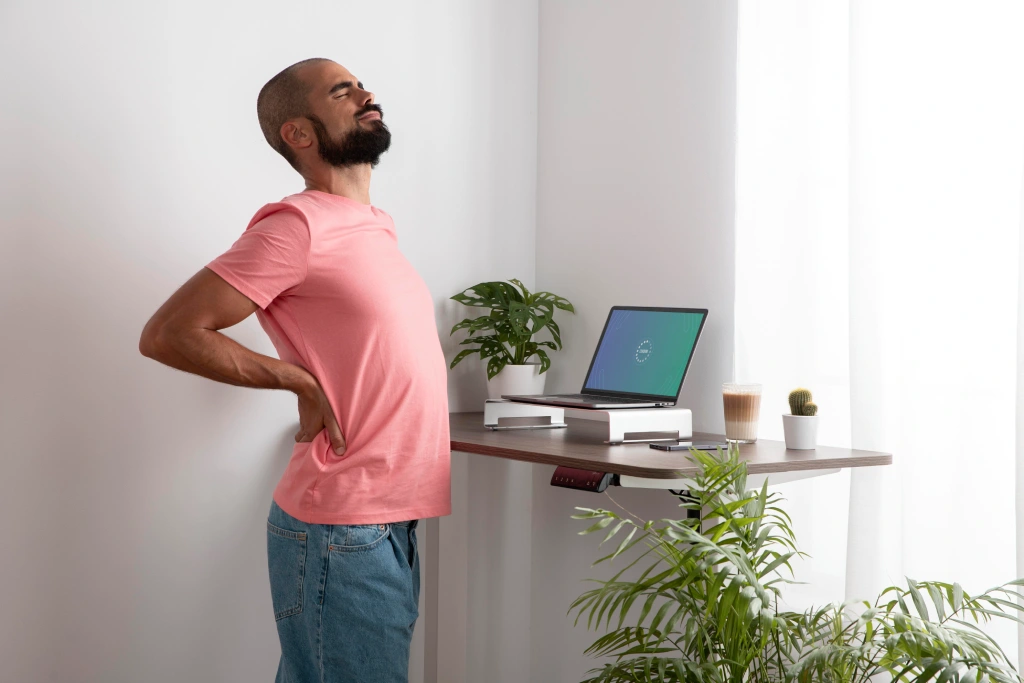
Some people experience the opposite problem: sitting feels comfortable, but standing for several minutes causes aching, pressure, or stiffness in the lower back.
Standing requires ongoing activity from the muscles and joints supporting the spine. Possible causes include muscular fatigue, facet joint-related pain, spinal stenosis, SI joint conditions, and other musculoskeletal problems.
Facet Joint Pain
Facet joints are small joints located along the back of the spine. They guide movement and help stabilize the spine.
Pain associated with these joints may become more noticeable during certain movements, including extension or twisting. Possible symptoms include:
- Localized lower back aching
- Stiffness after inactivity
- Pain while leaning backward
- Discomfort during prolonged standing
- Pain with twisting movements
These symptoms can overlap with disc-related or muscular pain. Learn more about facet joint pain symptoms.
Spinal Arthritis
Degenerative changes in the spinal joints may contribute to discomfort when standing. Some people experience increased aching while cooking, shopping, standing at work, or performing household tasks. However, arthritis seen on imaging does not always explain a patient’s pain. Explore arthritis pain management options for managing chronic joint wear.
Lumbar Spinal Stenosis
Lumbar spinal stenosis occurs when the spaces around the nerves in the lower spine narrow. Some patients develop lower back or leg discomfort while standing upright. Symptoms may improve with sitting or leaning forward. Some patients may also experience leg heaviness, tingling, numbness or reduced walking tolerance.
SI Joint Dysfunction
The sacroiliac joints connect the spine and pelvis. SI joint-related pain may be felt near one side of the lower back, buttock, or hip. Some patients notice discomfort during prolonged standing, stair climbing, or transitions between sitting and standing.
Read more about SI joint dysfunction explained and how it differs from other lower back conditions.
What Can Help Back Pain While Standing?
Depending on the diagnosis, helpful adjustments may include:
- Taking regular movement or sitting breaks
- Alternating between sitting and standing during work
- Avoiding prolonged fixed positions
- Gradually improving strength and activity tolerance
- Wearing comfortable, supportive footwear
- Following an appropriate physical therapy program
If standing causes leg weakness, numbness, or significant pain that limits normal activity, seek medical assessment.
Why Does My Back Hurt When Walking?
Walking generally benefits physical health and is often encouraged during back pain recovery. However, some people develop increasing back, buttock, or leg discomfort as they walk. Key factors include how far you can walk, whether symptoms extend into your legs, and what happens when you stop.
Lumbar Spinal Stenosis
A characteristic symptom pattern of lumbar spinal stenosis is discomfort that worsens with standing or walking and improves when you sit or lean forward. This may occur because bending forward can increase the available space around certain spinal nerves.
Symptoms can include:
- Lower back aching
- Buttock or leg pain
- Leg heaviness
- Tingling or numbness
- Weakness or fatigue during walking
- Needing to stop frequently
Some patients find that walking while leaning slightly forward, such as when pushing a shopping cart, is more comfortable. This pattern is often called neurogenic claudication.
However, leg pain during walking can also result from circulation problems or other conditions. A healthcare professional may need to distinguish between these causes. Learn more about spinal stenosis symptoms and treatment.
Facet Joint-Related Pain
Some patients with suspected facet-mediated pain report increasing discomfort during prolonged upright activity. The pain may stay localized to the lower back or spread to nearby areas. Because facet pain shares symptoms with other conditions, a clinical evaluation is necessary.
SI Joint Problems
Walking involves repeated movement and loading through the pelvis and lower spine. For some individuals, SI joint-related discomfort becomes more noticeable while walking, climbing stairs, or walking on uneven ground. When simple conservative steps do not relieve pelvic girdle pain, targeted SI joint pain treatment can help restore mobility.
Muscular Fatigue and Reduced Conditioning
Reduced strength, endurance, or activity tolerance can also contribute to discomfort during walking. This may occur when someone has become less active because of previous pain. A progressive exercise program may help selected patients rebuild walking tolerance.
Why Does My Back Hurt After Walking Only a Short Distance?
If pain begins after a predictable walking distance, pay attention to:
- Whether pain occurs in the back, legs, or both
- Whether numbness or heaviness develops
- Whether simply stopping helps
- Whether you need to sit or lean forward for relief
- Whether your walking distance is decreasing
These details can help a clinician evaluate conditions such as spinal stenosis, circulation problems, or musculoskeletal pain.
A sudden inability to walk, significant new weakness, or severe symptoms requires urgent evaluation.
Why Does My Back Hurt While Driving?
If pain begins after a predictable walking distance, pay attention to:
- Whether pain occurs in the back, legs, or both
- Whether numbness or heaviness develops
- Whether simply stopping helps
- Whether you need to sit or lean forward for relief
- Whether your walking distance is decreasing
These details can help a clinician evaluate conditions such as spinal stenosis, circulation problems, or musculoskeletal pain. A sudden inability to walk, significant new weakness, or severe symptoms requires urgent evaluation.
Why Does My Back Hurt While Driving?
Driving combines prolonged sitting, limited movement, whole-body vibration, and the need to maintain a relatively fixed position. For people with existing back pain, these factors can make even an ordinary commute uncomfortable.
Long-distance drivers, delivery workers, commuters, and frequent travelers may notice pain developing gradually during a journey.
- Prolonged Sitting: Sitting for long periods can contribute to stiffness and discomfort. Certain disc-related conditions may also become more symptomatic in some seated positions.
- Sciatica and Nerve-Related Pain: Some patients experience buttock or leg pain while driving. Symptoms may include burning, tingling, numbness, or shooting discomfort. These symptoms should be medically evaluated when persistent or worsening.
- Vibration and Repetitive Loading: Road vibration and repeated movement can aggravate some existing back conditions. Discomfort may depend on the vehicle, seat, driving duration and individual condition.
- Muscle Fatigue: Staying in a relatively fixed driving position can contribute to muscle fatigue. Some drivers feel discomfort after getting out of the vehicle after a long trip.
How to Reduce Back Pain While Driving
For uncomplicated back pain, practical measures may include:
- Adjust the seat. Position it so you can reach the pedals and steering wheel without excessive stretching.
- Support the lower back comfortably. A small lumbar cushion may help some people.
- Avoid sitting in one position for extended periods. Take safe breaks during long trips.
- Move when you stop. Gentle walking may relieve stiffness.
- Avoid driving when symptoms affect safe vehicle control. Significant weakness, numbness, or sedating medication can make driving unsafe.
If back pain began after a vehicle collision, seek appropriate medical assessment rather than assuming the discomfort is simply from sitting. Our guide to lower back pain after a car accident explains common injuries, delayed symptoms, and when to seek care.
Why Does Back Pain Feel Better When I Sit Down?
For some patients, sitting provides noticeable relief after standing or walking. This may happen for several reasons:
- Spinal Stenosis: Sitting often involves bending the lumbar spine slightly forward, which may reduce pressure on certain compressed nerves. People with spinal stenosis may notice that leg discomfort worsens with standing or walking, while sitting provides relief.
- Certain Spinal Joint Conditions: Switching from standing to sitting can change how the lumbar spine and surrounding muscles are loaded. Some people with joint-related pain notice improvement, although responses vary.
- Muscular Fatigue: Sitting can temporarily reduce the work required of the muscles that support an upright position.
If discomfort returns repeatedly when standing, assess the underlying cause. Pain relief while sitting is a useful clue, but it is not enough to diagnose spinal stenosis, arthritis, or facet joint pain.
Why Does My Back Feel Better When I Walk or Move?
Some people experience lower back stiffness after sitting or lying down but feel better once they start moving. Possible explanations include:
- Muscle Stiffness: Gentle movement may reduce discomfort from prolonged inactivity.
- Movement Sensitivity: Some patients feel worse when they stay in one position but feel more comfortable when they change positions regularly.
- Certain Arthritic or Inflammatory Conditions: Movement may improve stiffness associated with some joint conditions. Inflammatory back pain, in particular, may improve with exercise and worsen during prolonged rest.
A medical professional should evaluate persistent morning stiffness or symptoms suggestive of inflammatory disease. If movement improves your pain, that can help guide activity recommendations, but it does not establish a diagnosis.
Why Does My Back Hurt When I Stand Up After Sitting?
Pain during the transition from sitting to standing is another common complaint. Some people feel a sharp twinge, while others experience stiffness that gradually improves after a few steps.
Possible explanations include muscle discomfort, spinal joint irritation, disc-related symptoms, or sensitivity to movement. Notice whether the pain:
- Lasts only a few seconds or continues
- Improves after walking
- Spreads into the legs
- Is associated with numbness or weakness
- Is becoming more frequent or severe
Persistent or worsening symptoms deserve medical assessment.
How Can You Tell Whether Back Pain Is Coming From a Disc, Joint, or Nerve?
Patients often try to identify a specific diagnosis based on which movement causes pain. For example:
- “My back hurts when I sit, so I must have a disc problem.”
- “I hurt when I stand, so it must be arthritis.”
- “Walking causes leg pain, so I must have spinal stenosis.”
Although these associations may provide clues, they are not definitive. A herniated disc can cause different symptoms in different people. Muscular and joint-related conditions can overlap, and some patients have multiple sources of pain. Understanding the differences between muscle, nerve and joint pain helps clarify how symptom patterns present.
Questions That Help Your Doctor Understand the Pain
Before your appointment, consider keeping a short record of:
- Where the pain occurs
- Which activities trigger symptoms
- How long you can sit, stand, walk, or drive
- Whether discomfort travels into a leg
- Whether numbness or tingling develops
- What relieves the symptoms
- How your daily activities are affected
- Which treatments you have already tried
This information may help guide the physical examination and determine whether further testing is appropriate.
When Should You Worry About Activity-Related Back Pain?
Most uncomplicated back pain does not represent a medical emergency. However, certain symptoms warrant immediate attention.
Seek Emergency Care If You Experience:
- New loss of bladder or bowel control
- New difficulty urinating with neurological symptoms
- Numbness around the groin, inner thighs, or buttocks
- Rapidly worsening leg weakness
- Inability to stand or walk following an injury
- Severe back pain after significant trauma
These may indicate serious spinal or neurological conditions, including cauda equina syndrome.
When to Arrange a Medical Evaluation
Seek medical advice if:
- Pain continues worsening
- Symptoms persist despite appropriate initial care
- Back pain repeatedly interrupts sleep
- Numbness or tingling develops
- Walking or standing becomes increasingly difficult
- Pain affects work or normal activities
- You develop unexplained weight loss, fever, or other concerning symptoms
If pain continues for months, read our comprehensive resource on chronic lower back pain causes, symptoms and treatment of chronic lower back pain.
How Do Doctors Diagnose Activity-Related Back Pain?
Because multiple conditions can cause similar symptoms, evaluation usually includes medical history, a physical examination and selected tests.
Medical History
Your provider may ask:
- Does sitting or standing aggravate pain?
- How far can you walk before symptoms begin?
- Does sitting or leaning forward relieve discomfort?
- Does pain travel into either leg?
- Do you have tingling, numbness, or weakness?
- Have you experienced previous spinal injuries?
- What treatments have you tried?
Physical and Neurological Examination
A clinician may assess range of motion, tenderness, muscle strength, reflexes, sensation, walking and balance, and clinical findings suggesting nerve involvement.
Imaging Studies
Not everyone with back pain needs imaging. When clinically appropriate, tests may include:
- X-rays: To assess selected bone and alignment concerns.
- MRI: To evaluate spinal discs, nerves, ligaments, and other soft tissues.
- CT scans: To provide detailed bone images when indicated.
Consider imaging findings alongside the patient’s symptoms and examination.
Diagnostic Injections
For selected patients with persistent pain, targeted diagnostic procedures may help evaluate whether particular joints or nerves contribute to symptoms. For example, medial branch blocks may help assess suspected facet joint-related pain. These procedures are not routinely indicated for every person with back pain.
What Non-Surgical Treatments May Help Activity-Related Back Pain?
Treatment depends on the diagnosis, symptom duration, severity, prior care and impact on daily function. Many patients improve with conservative care and don’t need invasive surgery.
Physical Therapy and Exercise
Physical therapy may help improve strength, movement tolerance, flexibility, balance, and coordination. Understanding the difference between physical therapy and pain management helps patients see how interventional specialists work with therapists to maximize recovery.
Activity Modification & Medication
Changing how long you remain in one position, adjusting work ergonomics, and gradually increasing comfortable movement may help some patients. When conservative self-care is not enough, non-opioid medications may relieve symptoms based on clinical history and medical evaluation.
Epidural Steroid Injections
When persistent radiating leg pain is associated with spinal nerve irritation, epidural steroid injections deliver targeted anti-inflammatory medication into the epidural space near spinal nerve roots to calm nerve inflammation.
Facet Joint Procedures
When a patient’s history and examination suggest possible facet-mediated pain, targeted facet joint injections can reduce localized inflammation and help confirm the pain generator.
Radiofrequency Ablation
For selected patients with chronic facet-mediated pain confirmed by diagnostic nerve blocks, radiofrequency ablation uses controlled heat to interrupt pain signals carried by sensory nerves for lasting relief.
SI Joint-Related Treatment
Patients with suspected SI joint pain may require targeted examination, further investigation, and selected diagnostic or therapeutic procedures.
For a broader discussion of options, see our guide on non-surgical treatments for chronic back pain.
When Should You See a Pain Management Specialist?
If back pain consistently limits how long you can sit, stand, walk, or drive, further evaluation may be appropriate. Knowing when to see interventional pain specialists can prevent long-term functional decline and unnecessary surgical procedures.
Consider discussing a referral if:
- Back pain persists despite appropriate conservative care
- You cannot sit or stand comfortably for normal activities
- Walking tolerance is becoming limited
- Pain extends into your buttock or leg
- Previous treatment has not provided adequate relief
- Your symptoms interfere with sleep or work
- Your healthcare provider recommends evaluation for non-surgical interventional treatment
A pain specialist does not automatically recommend injections or procedures. The goal is to determine which treatment options may be suitable based on the clinical findings.
Looking for a Pain Management Doctor in Lafayette, LA?
If persistent back pain interferes with work, driving, walking, or daily activities, a specialist evaluation may clarify your treatment options.
At Interventional Pain Specialists (IPS), Dr. Albert Gros, Jr. and our team evaluate persistent spine, joint, and nerve-related conditions. Dr. Gros is double board-certified in anesthesiology and pain medicine and has more than two decades of experience.
The IPS team considers the patient’s symptoms, activity limitations, medical history, previous treatments, and relevant imaging when discussing an individualized treatment plan. Depending on the diagnosis, treatment options may include targeted spinal injections, diagnostic nerve blocks, radiofrequency ablation, and other minimally invasive procedures.
Patients looking for pain management Lafayette LA can explore our practice to learn more about our experienced providers and available clinical options.
Back Pain Treatment in Lafayette
Interventional Pain Specialists provides evaluations and treatment options for patients experiencing persistent back pain associated with spinal discs, nerves, joints, and other conditions.
Patients can learn more about specialized back pain treatment in Lafayette, LA, including relevant services and appointment information.
Interventional Pain Specialists – Lafayette
1101 S. College Rd., Suite 200
Lafayette, LA 70503
Phone: (337) 362-8101
Pain Management in Opelousas
We also provide pain management services for patients in Opelousas and surrounding Louisiana communities.
Patients with persistent spine, joint, or nerve-related pain can visit the Opelousas pain management clinic to learn more about care and scheduling.
Interventional Pain Specialists – Opelousas
3983 I-49 S. Service Road
Opelousas, LA
Phone: (337) 284-3200
Take the Next Step
If back pain is repeatedly interfering with sitting, standing, walking, or driving despite initial treatment, contact us to discuss whether a pain management consultation may be appropriate.
IPS provides specialized pain management services and does not replace emergency medical care for serious injuries or neurological emergencies.
Frequently Asked Questions
Why does my back hurt more when sitting than standing?
Sitting-related back pain may be associated with muscle stiffness, disc-related discomfort, or nerve irritation. The pain pattern alone cannot identify the exact cause. Assess persistent symptoms in the context of medical history and examination.
Why does my back hurt when standing but feel better when sitting?
This pattern may occur with lumbar spinal stenosis, certain spinal joint conditions, or muscular discomfort. Relief from sitting is especially relevant when leg pain during standing or walking accompanies the back pain.
Why does walking make my lower back hurt?
Walking-related pain may involve spinal stenosis, SI joint problems, facet joints, or muscular limitations. Leg discomfort that worsens with walking and improves when you sit or lean forward may suggest spinal stenosis, although other conditions can cause similar symptoms.
Why does my lower back hurt after sitting for 30 minutes?
Pain after sitting for a set period may reflect position-related muscle discomfort, disc-related symptoms, or another spinal condition. Regular movement breaks may help some people, but ongoing pain should be evaluated.
Why does my back hurt when I stand up after sitting?
Transitions from sitting to standing can aggravate stiffness, muscular pain, or certain joint and disc-related conditions. Persistent or worsening pain, especially with neurological symptoms, requires medical assessment.
Why does my back hurt when driving but not walking?
Driving involves prolonged sitting, vibration, and limited movement. These factors may aggravate certain muscular, disc-related, or nerve-related conditions. The response can vary from person to person.
Why does leaning forward relieve my back pain?
Some people with lumbar spinal stenosis feel better when leaning forward because this position may increase space around certain spinal nerves. However, relief with forward bending does not confirm spinal stenosis.
Is walking good for lower back pain?
Walking often helps with uncomplicated back pain and may help maintain activity and strength. The appropriate distance and intensity depend on the diagnosis and symptoms. Seek assessment if walking produces significant leg pain, weakness, or numbness.
Can sciatica cause pain when sitting or driving?
Yes. Some people with sciatica experience increased buttock or leg pain during prolonged sitting or driving. Persistent nerve-related symptoms should be evaluated to determine the likely cause.
Can facet joint pain become worse when standing?
Some patients with suspected facet-mediated pain experience increased discomfort during standing, twisting, or leaning backward. However, these symptoms are not specific enough to diagnose facet joint pain without further assessment.
When should I worry about back pain while walking?
Seek medical assessment if walking increases leg pain, numbness, or reduces mobility. Sudden severe weakness, inability to walk, or bladder or bowel dysfunction requires emergency evaluation.
Can activity-related back pain be treated without surgery?
Yes. Many patients benefit from physical therapy, exercise, activity modification, appropriate medications, and other conservative measures. Selected patients may benefit from targeted interventional treatments depending on the diagnosis.
Medical References
- National Institute of Arthritis and Musculoskeletal and Skin Diseases: Back Pain
- National Institute of Arthritis and Musculoskeletal and Skin Diseases: Spinal Stenosis
- American Academy of Orthopaedic Surgeons: Lumbar Spinal Stenosis
- Mayo Clinic: Back Pain, Symptoms and Causes
- National Health Service: Back Pain
- American College of Radiology: Low Back Pain Imaging Criteria
Medical Disclaimer
This article is intended for educational purposes only and does not replace professional medical advice, diagnosis, or treatment. Back pain can have multiple contributing causes, and treatment recommendations should be based on individual clinical evaluation. Seek emergency medical attention for serious injuries or concerning neurological symptoms.