
Living with chronic back pain: what you should know
If you’re dealing with chronic back pain, even simple activities—like sitting at a desk, driving, or getting a good night’s sleep—can become difficult. Many patients worry that surgery may be the only option.
In reality, a wide range of non-surgical treatments for back pain are commonly used to help manage symptoms. These approaches focus on reducing discomfort, improving movement, and helping you return to daily activities safely.
Key Takeaways
- Many non-surgical treatments for chronic back pain may help manage symptoms effectively
- Treatment usually follows a step-by-step approach, starting with conservative care
- Options range from physical therapy to targeted injections and minimally invasive procedures
- Results vary, and combining treatments is often more effective than relying on one alone
- A personalized plan is important for safe and effective chronic back pain treatment
What is Chronic Back Pain?
Chronic back pain is typically defined as pain lasting longer than 12 weeks, even after the initial injury or cause has improved.
Common causes include:
- Degenerative disc disease
- Herniated or bulging discs
- Spinal arthritis (facet joint pain)
- Muscle strain or weakness
- Nerve-related conditions such as sciatica
Identifying the underlying cause helps guide the most appropriate non surgical back pain treatment
How doctors usually approach treatment
Most specialists follow a step-care approach when planning chronic back pain treatment:
Step 1: Lifestyle changes and physical therapy
Step 2: Medications for pain and inflammation
Step 3: Targeted injections (if pain persists)
Step 4: Minimally invasive procedures like radiofrequency ablation
This gradual approach helps patients explore effective non-invasive back pain treatment options before considering surgery.
Common Non-Surgical Treatment Options
1. Physical Therapy and Exercise

How it works: A structured program strengthens core muscles, improves flexibility, and supports spinal alignment.
Who it’s for: Often recommended as a first-line treatment for most types of chronic back pain.
Benefits:
- May improve strength and mobility
- Helps reduce strain on the spine
- Supports long-term pain management
Risks/limitations:
- Improvement may take several weeks
- Requires consistency and active participation
What to expect: Sessions typically occur 1–3 times per week. You’ll also be given exercises to continue at home. Gradual improvement is common over time.
2. Medications (Non-Opioid Focus)

How it works: Medications may help reduce inflammation, muscle tension, or nerve-related pain.
Common options include:
- Anti-inflammatory drugs (NSAIDs)
- Muscle relaxants
- Certain nerve pain medications
Who it’s for: Patients whose pain is interfering with daily activities or limiting movement.
Benefits:
- May help control pain levels
- Can make it easier to participate in therapy
Risks/limitations:
- Possible side effects (e.g., stomach irritation, drowsiness)
- Typically used as part of a broader treatment plan, not alone
What to expect: Your doctor may adjust medications over time based on your response and overall health.
For patients exploring alternatives beyond medication alone, this guide on pain management beyond medication may provide additional context.
3. Epidural Steroid Injections

How it works: Steroid medication is injected near irritated spinal nerves to reduce inflammation.
Who it’s for: Commonly used for nerve-related pain, such as sciatica or disc-related irritation.
Benefits:
- May provide temporary pain relief
- Can improve ability to move and engage in therapy
Risks / limitations:
- Relief duration varies (weeks to months for some patients)
- Not effective for all types of back pain
- Small risks include infection, bleeding, or temporary discomfort
What to expect: This is usually an outpatient procedure. Some patients notice relief within a few days, while others may take longer. These types of treatments are part of interventional pain procedures.
4. Facet Joint Injections and Medial Branch Blocks
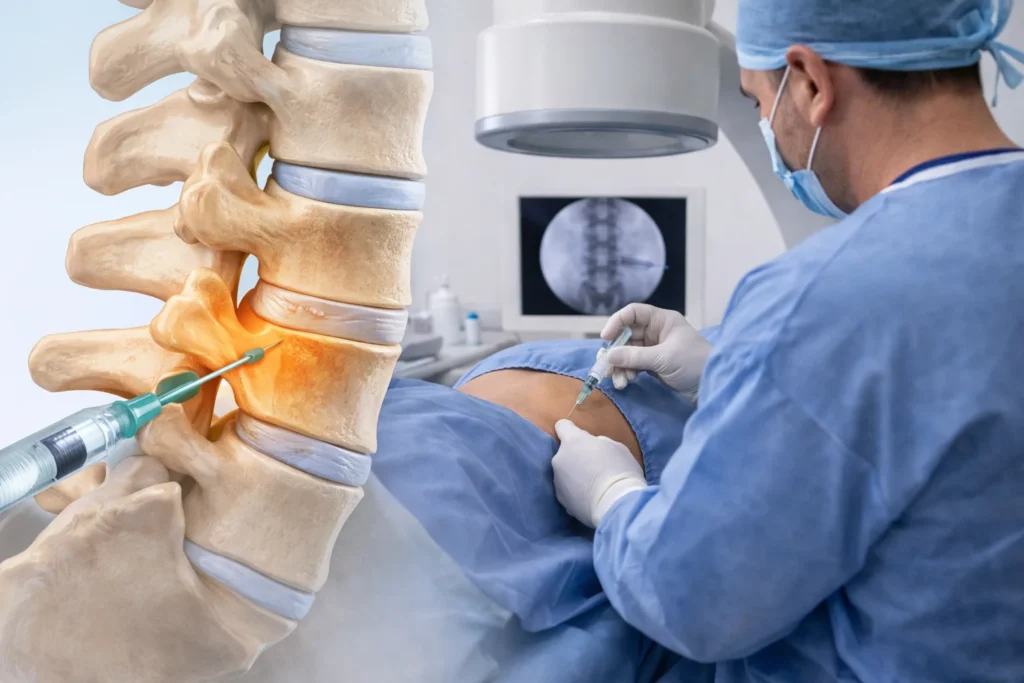
How it works: These injections target small joints in the spine that may be causing localized pain. They are often used to confirm the source of pain.
Who it’s for: Patients with suspected arthritis-related back pain.
Benefits:
- Helps identify whether facet joints are the pain source
- May provide short-term relief
Risks/limitations:
- Relief is often temporary
- May require repeat procedures for ongoing evaluation
What to expect: These are typically brief outpatient procedures. Pain relief, if achieved, can help guide the next step in treatment.
5. Radiofrequency Ablation (RFA)

How it works: This procedure uses heat to disrupt pain signals from targeted nerves.
Who it’s for: Patients who experienced relief from diagnostic nerve blocks (such as medial branch blocks).
Benefits:
- May provide longer-lasting relief (often several months for some patients)
- Minimally invasive and targeted
Risks/limitations:
- Pain relief is not permanent
- Mild soreness may occur after the procedure
What to expect: The procedure is usually done under local anesthesia. Most patients return to normal activities within a few days.
Learn more about this procedure in the radiofrequency ablation for pain relief guide.
6. Lifestyle and Ergonomic Changes

How it works: Daily habits and posture adjustments can reduce strain on the spine.
Examples include:
- Improving sitting and standing posture
- Using ergonomic chairs or workstations
- Maintaining a healthy weight
- Engaging in low-impact activities like walking or swimming
Who it’s for: All patients with chronic back pain.
Benefits:
- Supports long-term spine health
- Helps reduce recurrence of pain episodes
Risks/limitations:
- Requires consistency
- Improvements may be gradual
What to expect: Small, consistent changes over time can contribute to noticeable improvement.
Non-Surgical Treatments vs Surgery: What’s the Difference?
In many cases, non surgical back pain treatment are considered before surgery.
Non-surgical approaches:
- Typically involve lower risk
- Have shorter recovery times
- Focus on symptom management and function
Surgery may be considered when:
- Pain is severe and persistent
- There is significant nerve compression
- Conservative treatments have not provided enough relief
To better understand the differences, you can explore pain management vs surgery options.
What Results Can You Expect?
With non-surgical back pain treatment, improvement is often gradual rather than immediate.
Many patients experience:
- Reduced pain over time
- Improved mobility and strength
- Better ability to perform daily activities
Treatment plans are often adjusted along the way to better suit your progress and needs.
Thinking About Your Next Step
Choosing the right approach depends on your specific condition, lifestyle, and treatment goals.
You may consider asking your doctor:
- What is the likely cause of my back pain?
- Which non-surgical treatments are most appropriate for me?
- How long should I try conservative treatments before considering other options?
- Can I combine multiple therapies for better results?
If your pain is ongoing or affecting your quality of life, you may consider consulting experienced pain management providers for further evaluation.
When Should You Seek Medical Attention?
It’s important to consult a healthcare provider if:
- Pain lasts longer than a few weeks
- It interferes with daily activities or sleep
- You experience numbness, weakness, or radiating pain
Seek urgent care if you notice:
- Loss of bladder or bowel control
- Severe or worsening weakness
- Unexplained weight loss along with back pain
Frequently Asked Questions
1. Can chronic back pain improve without surgery?
Many patients experience improvement with non-surgical treatments, especially when therapies are combined and followed consistently.
2. What treatment is usually tried first?
Physical therapy and lifestyle changes are often recommended as initial steps before considering medications or procedures.
3. How long does relief from injections last?
Relief varies. Some patients experience benefits for weeks to months, while others may have shorter or longer responses.
4. Is radiofrequency ablation permanent?
No, the effects are not permanent. Pain relief may last for several months, and the procedure can sometimes be repeated if appropriate.
5. When should I consider seeing a specialist?
If your pain persists beyond a few weeks, worsens, or affects your daily life, consulting a specialist may help clarify your options.
Medical References
- Mayo Clinic – Chronic Back Pain & Treatment Options
- Cleveland Clinic – Back Pain Management and Non-Surgical Care
- National Institutes of Health (NIH) – Low Back Pain Overview
- American Society of Interventional Pain Physicians (ASIPP) – Interventional Pain Guidelines
- American Academy of Orthopaedic Surgeons (AAOS) – Low Back Pain Treatment
Disclaimer
This content is for informational purposes only and does not replace professional medical advice. Always consult a qualified healthcare provider for diagnosis and treatment.