





Sciatica Treatment in Opelousas, LA

Sharp, burning, or electric pain that starts in the lower back or buttock and travels into the thigh, calf, foot, or toes. Numbness, tingling, weakness, and difficulty sitting, standing, walking, driving, or sleeping often accompany it.

We evaluate the spinal condition and affected nerve before recommending treatment, building a care plan around the location and pattern of your pain, a physical exam, available imaging, prior treatment, and your goals.

Led by Albert Gros, Jr., MD — double board-certified, with more than two decades in anesthesiology and interventional pain management, offering minimally invasive, image-guided options for appropriately selected patients.

Dr Albert Gros with Brandi Menier and Ashley Whitmore

Sciatica Care at Our Opelousas Clinic

Interventional Pain Specialists – Opelousas

Address: 3983 I-49 S. Service Road, Opelousas, LA

Phone: (337) 284-3200

Our Opelousas clinic provides pain management evaluations for patients experiencing lower-back and leg pain, numbness, tingling, burning sensations, or weakness that may be related to irritation or compression of a lumbar spinal nerve.

Interventional Pain Specialists has locations in Opelousas and Lafayette and provides targeted spine, nerve, and pain treatments for patients throughout Acadiana. Contact the Opelousas office to confirm appointment availability and the location where the recommended procedure is performed.

what_is_sciatica_banner

What Is Sciatica?

Sciatica describes pain, numbness, tingling, or weakness that follows the pathway of the sciatic nerve and its contributing nerve roots. Symptoms commonly begin when a nerve root in the lower spine becomes irritated or compressed.

Pain may travel from the lower back or buttock into one leg and sometimes extend below the knee into the calf, foot, or toes. Sciatica is a symptom of an underlying condition rather than a diagnosis by itself.

Some patients have significant leg pain with little back pain, while others experience both lower-back and leg symptoms.

Common Symptoms of Sciatica

Sciatic symptoms vary according to which nerve root is involved and how severely it is affected.

Patients may experience:

  • Pain beginning in the lower back or buttock
  • Pain traveling through the thigh or calf
  • Sharp or shooting leg pain
  • Burning or electric sensations
  • Tingling or pins and needles
  • Numbness in the leg or foot
  • Weakness in the leg, ankle, or foot
  • Pain aggravated by sitting
  • Symptoms worsened by coughing or sneezing
  • Difficulty standing or walking
  • Symptoms affecting one side more than the other

Sciatic symptoms can vary depending on the affected nerve and severity of irritation. The pattern of pain and neurological symptoms can help guide an evaluation, but an examination is needed to determine the likely underlying cause.

common_symptoms_of_sciatica_banner
sciatica_specialist_In_opelousas_banner

When Should You See a Sciatica Specialist?

Some episodes improve with time and appropriate conservative treatment. Consider scheduling an evaluation when symptoms:

  • Continue for several weeks
  • Repeatedly return
  • Interfere with work, sleep, or driving
  • Make sitting or standing difficult
  • Travel below the knee
  • Cause persistent numbness or tingling
  • Include leg or foot weakness
  • Limit walking or exercise
  • Have not improved sufficiently with medication or physical therapy
  • Began after an accident or injury
  • Continue after previous back treatment or surgery

A pain specialist evaluates whether the symptoms represent lumbar nerve-root irritation and whether a targeted treatment may be appropriate. Scheduling an evaluation does not automatically mean you will need an injection or surgery.

What Causes Sciatica?

Sciatica can develop when a lumbar nerve becomes irritated, inflamed, or compressed. Common causes include:

Herniated or Bulging Disc

A herniated or bulging lumbar disc can irritate or compress a nearby nerve root, causing pain, tingling, numbness, or weakness that travels into the leg.

Lumbar Spinal Stenosis

Narrowing around the spinal nerves can cause lower-back, buttock, or leg pain, numbness, tingling, weakness, or difficulty standing and walking.

Foraminal Stenosis

Narrowing of the openings where spinal nerves exit can irritate a nerve root. Disc-height loss, arthritis, and bone spurs can contribute to this narrowing.

Degenerative Spinal Changes

Age-related changes involving discs, joints, and other spinal structures may contribute to nerve irritation or narrowing. Imaging findings must be considered alongside symptoms and examination findings.

Spondylolisthesis

When one vertebra shifts relative to another, it can narrow the spaces around spinal nerves and contribute to back pain, sciatica, numbness, or weakness.

Persistent Pain After Spine Surgery

Sciatic or nerve-related pain can continue after lumbar surgery because of ongoing nerve irritation, recurrent disc problems, scar tissue, or changes at another spinal level.

Other conditions, including hip problems, sacroiliac joint pain, muscle-related pain, and peripheral nerve disorders, can produce similar symptoms. An evaluation helps determine whether symptoms originate in the lumbar spine or elsewhere.

Sciatica and Referred Leg Pain Are Not Always the Same

Not all pain traveling through the buttock or leg is caused by lumbar nerve-root compression. Hip conditions, sacroiliac-joint pain, muscular pain, peripheral nerve entrapment, and other conditions can produce similar symptoms.

During an evaluation, our team considers the location and pattern of pain, numbness, or tingling, muscle strength, reflexes, movement, imaging findings, and response to previous treatment. This helps identify the most likely source of symptoms before treatment is recommended.

sciatica_and_referred_leg

How We Evaluate Sciatica

Our evaluation helps identify the affected nerve, determine the cause of irritation, and decide whether interventional treatment is appropriate.

Review of Your Symptoms

We discuss where the pain begins, how far it travels, and whether it affects the front, side, or back of the leg. We also evaluate numbness, tingling, weakness, activities that worsen symptoms, previous injuries, treatments attempted, and how sciatica affects daily activities.

Medical and Treatment History

We review prior back injuries, spine procedures, physical therapy, medications, injections, other health conditions, and changes in symptoms over time.

Physical and Neurological Examination

Our examination may assess leg strength, reflexes, sensation, lower back movement, walking pattern, and positions that reproduce symptoms or suggest nerve-root involvement.

Review of Imaging

We review available MRI scans, X-rays, CT scans, and reports when appropriate. Imaging is not needed for every new episode of uncomplicated sciatica but may be recommended when symptoms persist, worsen, neurological changes occur, or injection or surgical treatment is being considered.

Diagnostic Nerve-Root Blocks

When the source of nerve irritation is unclear, a selective nerve root block may help identify the affected nerve. Medication is placed around a specific nerve root, and the response can provide diagnostic information and help guide future treatment.

Sciatica Treatment Options in Opelousas

Sciatica treatment depends on the underlying spinal condition, affected nerve, symptom severity, duration, neurological findings, previous treatments, and overall health. Our goal is to reduce pain, improve function, and address the source of nerve irritation.

polyneuropathy

Conservative Care and Rehabilitation

Treatment may begin with activity modification, physical therapy, strengthening exercises, mobility training, medication management, and ergonomic adjustments. A gradual return to normal activities is often recommended, as prolonged inactivity may not improve recovery. Pain relief may also help some patients participate more effectively in rehabilitation.

mononeuropathy

Lumbar Epidural Steroid Injections

A lumbar epidural steroid injection delivers anti-inflammatory medication near irritated spinal nerves. It may be considered for sciatica caused by lumbar radiculopathy, herniated or bulging discs, spinal stenosis, or nerve inflammation. The goal is to reduce inflammation and pain around the affected nerve. Epidural injections do not repair structural problems but may provide relief while supporting recovery and rehabilitation.

sensory_neuropathy

Selective Nerve Root Blocks

A selective nerve root block targets one specific spinal nerve near where it exits the spine. It may help identify the source of symptoms, reduce inflammation, and guide treatment when multiple spinal levels may be involved. These injections may be considered for sciatica, lumbar radiculopathy, pinched nerves, herniated discs, and spinal stenosis.
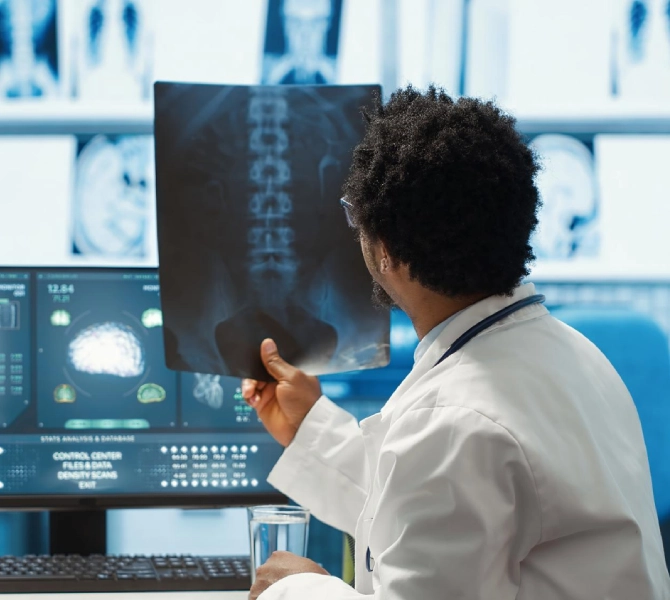

Epidural Injection vs. Selective Nerve Root Block

Both treatments may help radiating nerve pain, but they serve different purposes. Epidural injections treat a broader area around irritated spinal nerves, while selective nerve root blocks target a specific nerve and may provide additional diagnostic information. The appropriate option depends on symptoms, examination findings, imaging, and treatment goals.

Treatment for Sciatica Caused by Spinal Stenosis

When sciatica is related to spinal stenosis, treatment depends on the severity of narrowing and symptoms. Options may include rehabilitation, medications, epidural injections, selective nerve root blocks, minimally invasive procedures, or surgical evaluation when needed. Worsening weakness, walking difficulties, or significant neurological changes require further assessment.

Spinal Cord Stimulation

Spinal cord stimulation uses an implanted device to modify pain signals and may be considered for carefully selected patients with chronic neuropathic leg pain, including some patients with persistent symptoms after spine surgery. It is not typically used as an initial treatment for new or uncomplicated sciatica. Patients usually complete an evaluation and temporary trial before permanent implantation.

When Surgical Evaluation May Be Necessary

Many patients with sciatica do not need surgery. However, referral to a spine surgeon may be appropriate when:

  • Weakness is severe or progressing
  • A structural problem is causing significant neurological impairment
  • Walking ability continues to decline
  • Symptoms remain disabling despite appropriate nonsurgical care
  • Imaging identifies compression that is unlikely to respond sufficiently to pain-management treatment
  • Cauda equina syndrome is suspected

We can evaluate the pain condition and help determine whether interventional care or assessment by another specialist is the more appropriate next step.

A Personalized Approach to Sciatic Pain

Diabetic neuropathy can reduce the ability to feel cuts, blisters, pressure, heat, or other foot injuries. Reduced sensation may allow a minor injury to worsen before it is noticed.

People with diabetes and reduced foot sensation should:

  • Check their feet every day for cuts, blisters, redness, swelling, or drainage.
  • Check between the toes for signs of irritation or injury.
  • Wear properly fitting shoes and avoid walking barefoot.
  • Receive regular professional foot examinations.
  • Seek prompt medical care for wounds, infections, or other changes that do not improve.

Good foot care is an important part of preventing complications when neuropathy affects sensation in the feet.

Why Choose Interventional Pain Specialists for Sciatica Treatment in Opelousas?

  • Experienced Interventional Pain Care
    Dr. Albert Gros has more than two decades of experience in anesthesiology and interventional pain management, including targeted procedures for spine, nerve, and chronic pain conditions.
  • Targeted Image-Guided Procedures
    We use image guidance to help accurately position treatment around the intended spinal nerve or epidural region.
  • Diagnostic and Therapeutic Options
    Certain procedures, including selective nerve root blocks, can provide both diagnostic information and therapeutic relief for appropriately selected patients.
  • Individualized Treatment Planning
    Recommendations are based on symptoms, examination findings, imaging, medical history, previous treatment, and functional goals.
  • Focus on Function
    Treatment planning considers how pain affects sitting, standing, walking, driving, sleep, work, exercise, and everyday activities.
  • Opelousas Location
    Patients can receive pain-management evaluation at the Opelousas clinic at 3983 I-49 S. Service Road, Opelousas, LA.
interventional_pain_specialists_for_sciatica_treatment_in_opelousas
Dr Albert Gros Jr anesthesiologist and pain medicine specialist

Meet Albert Gros, Jr., MD

Anesthesiology and Pain Management Specialist

Albert Gros, Jr., MD, leads care at Interventional Pain Specialists. He is board-certified by the American Board of Anesthesiology and the American Board of Pain Medicine. His experience includes epidural steroid injections, nerve blocks, spinal cord stimulation, and other minimally invasive treatments for spine, joint, and nerve-related pain.

What to Bring to Your Appointment

Bring any available information that can help the team understand the cause and progression of your symptoms:

  • Photo identification & insurance card
  • Current medication list
  • Relevant medical records
  • MRI, CT, or X-ray reports (and copies of imaging, if available)
  • Physical therapy records
  • Details of previous injections or prior spine surgery
  • Referral or authorization documents, if required
  • Questions you’d like to discuss

Insurance Information

We accept most insurance providers, including:

Coverage, referrals, prior authorization, deductibles, and out-of-pocket expenses vary by plan. Contact the Opelousas office and your insurance provider before treatment to confirm your benefits and determine whether a referral or prior authorization is required.

Opelousas office: (337) 284-3200

When Sciatica Requires Urgent Medical Attention

A routine pain-management appointment is not a substitute for urgent or emergency care. Seek immediate medical evaluation if lower-back or leg pain is accompanied by:

  • New loss of bladder or bowel control
  • Difficulty controlling urination
  • Numbness around the groin, inner thighs, or saddle area
  • Rapidly worsening leg weakness
  • Sudden foot drop
  • Weakness affecting both legs
  • Sudden inability to stand or walk
  • Severe symptoms following significant trauma
  • Fever with severe spinal pain

These symptoms may indicate cauda equina syndrome or another serious spinal condition requiring immediate medical evaluation.

sciatica_requires_urgent_treatment

What Our Patients Say

Keisha S.
"I had arm numbness in both arms and my first three fingers. Dangerous when you’re driving and can’t feel your arms. I also had lower back pain and spasms almost every day. Once I started coming to this wonderful place with these wonderful people, I have to say my arms are not numb anymore and my back spasms are gone. Granted, I get to come back every three months, which in most cases is a pain, but coming to this office is a treat. So, I happily come to get my injections every three months. The professionalism yet comfortable feeling is awesome, not something you get from doctors these days! Dr. Gros is AMAZING! I would recommend 100x over and over! Thanks, guys, for giving me my life back! All of you are exceptional."
Dawn P.
I was referred to Dr. Albert Gros by another physician, and I’m finally regaining a pain-free quality of life. Dr. Gros and his ENTIRE staff always provide A+ service. I highly recommend you consider this Pain Management practice.
Chris D.
I had extreme pain in my middle & lower back as well as moderate pain in my right knee. I am so EXTREMELY EXCITED that my pain is now so much less.
Leslie H.
He's the best!
Lynette S.
Great doctor and team that is very caring about their patients.
Angela G.
Great doctor and wonderful staff!
Joy P.
I love, love, love, the staff here!!! They are so caring and informative.

Professional Associations And Memberships

Schedule a Sciatica Evaluation in Opelousas

Sciatic pain can interfere with sitting, walking, driving, sleep, work, and everyday activities. Because several spinal and nonspinal conditions can produce similar symptoms, identifying the likely source of pain is important before selecting treatment.

Contact Interventional Pain Specialists in Opelousas to discuss your symptoms and determine whether an evaluation or targeted treatment may be appropriate.

Interventional Pain Specialists – Opelousas

3983 I-49 S. Service Road
Opelousas, LA

(337) 284-3200

Frequently Asked Questions

Sciatica usually results from irritation or compression of a nerve root in the lower spine, but symptoms are commonly felt in the buttock or leg. Some patients also experience lower-back pain.

A pain management specialist can evaluate persistent sciatica and determine whether conservative care, an injection, a nerve block, or another treatment may be appropriate. Patients with significant neurological problems or structural conditions requiring surgery may need evaluation by a spine surgeon.

Yes. A herniated lumbar disc can irritate or compress a spinal nerve root and cause pain, numbness, tingling, or weakness in the leg. Imaging findings should be considered alongside symptoms and examination findings.

Yes. Narrowing around the lumbar nerves can cause buttock or leg pain, numbness, tingling, heaviness, weakness, and difficulty standing or walking.

IPS offers epidural steroid injections and selective nerve root blocks for appropriately selected patients with lumbar radiculopathy and sciatic symptoms. Contact the Opelousas office to discuss your condition and confirm where a recommended procedure is performed.

There is no single injection that is best for every patient. Epidural injections and selective nerve root blocks serve different purposes, and the appropriate option depends on the suspected pain source, symptoms, examination findings, and imaging.

An epidural injection may reduce inflammation and pain around an irritated nerve, but it does not repair every underlying structural problem. The amount and duration of relief vary by patient and condition.

Yes. Some cases improve with time, activity modification, rehabilitation, and other conservative treatment. An injection may be considered when symptoms persist or significantly interfere with daily activities.

Call (337) 284-3200 or submit the appointment request form through the IPS website to schedule an evaluation.