

Living With Chronic Pain: Why Daily Management Matters
If you’re dealing with chronic pain, even simple daily activities can feel overwhelming. Whether it’s back pain, joint discomfort, or nerve-related pain, the challenge often isn’t just the pain itself—it’s managing it consistently.
Learning how to manage chronic pain day-to-day can make a meaningful difference in your quality of life. While there may not be a single solution that works for everyone, a combination of medically supported strategies can help reduce discomfort, improve function, and support overall well-being—especially when guided by experienced providers in areas like Lafayette and Opelousas.
Key Takeaways
- Chronic pain is often best managed through a combination of lifestyle changes and medical care
- Small, consistent habits can help improve pain control over time
- Both physical and mental health strategies play an important role
- A chronic pain management doctor can help tailor treatment to your needs
1. Stay Physically Active (Within Your Limits)
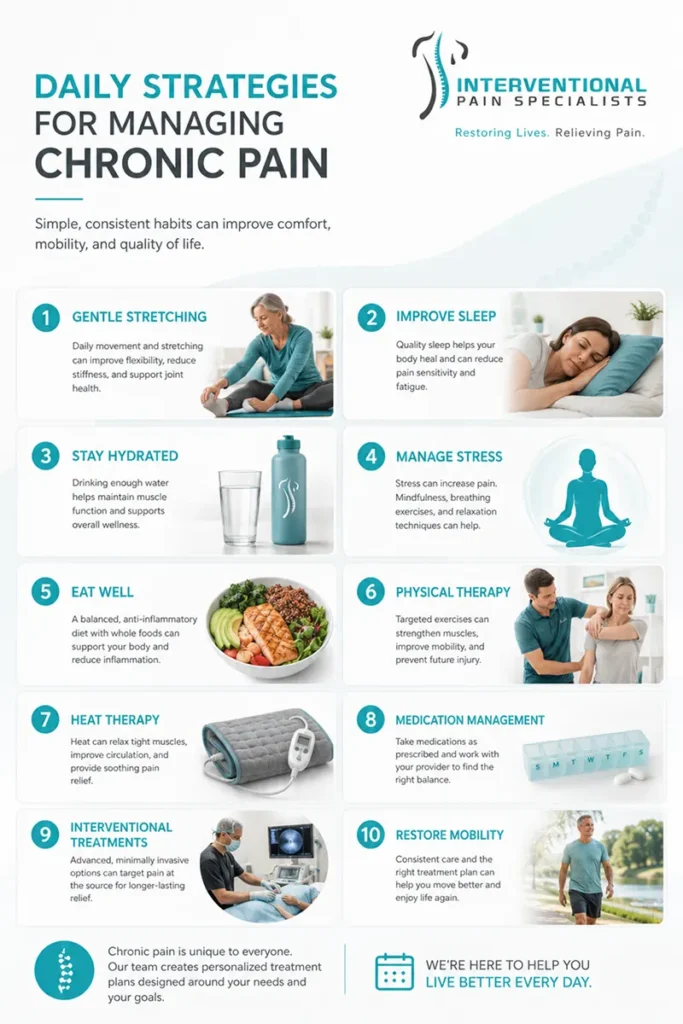
Movement may feel difficult when you’re in pain, but gentle, regular activity is one of the most effective ways of managing chronic pain.
Low-impact exercises like walking, stretching, or swimming may help:
- Improve flexibility and mobility
- Strengthen muscles that support joints
- Reduce stiffness and inflammation
Start slowly and increase activity gradually. In many cases, combining movement with structured care—such as guidance discussed in this overview of physical therapy vs pain management can help you choose the right approach for your condition.
2. Build a Consistent Pain Management Routine
Consistency matters. Establishing a daily routine can help your body adapt and respond better to pain management strategies.
This may include:
- Taking medications as prescribed
- Scheduling regular movement breaks
- Practicing relaxation techniques
A structured routine is often part of a broader pain management approach that focuses on long-term symptom control rather than quick fixes.
3. Use Heat and Cold Therapy
Heat and cold treatments are simple tools that may provide relief for different types of pain.
- Heat therapy may help relax muscles and improve blood flow
- Cold therapy may reduce inflammation and numb sharp pain
Many people alternate between the two depending on their symptoms.
4. Focus on Sleep Quality

Chronic pain and poor sleep often go hand in hand. Improving sleep habits can help reduce pain sensitivity and improve energy levels.
Helpful tips include:
- Maintaining a consistent sleep schedule
- Creating a comfortable sleep environment
- Avoiding screens before bedtime
If sleep problems persist, your doctor may evaluate for underlying sleep disorders. In some cases, understanding how long it may take for pain treatments to show results can help set realistic expectations.
5. Manage Stress and Emotional Health
Pain is not just physical—it also affects mental and emotional well-being. Stress can increase muscle tension and worsen pain symptoms.
Techniques that may help include:
- Deep breathing exercises
- Meditation or mindfulness practices
- Gentle yoga
Addressing emotional health is a key part of a well-rounded chronic pain management plan and is often recommended alongside medical treatments.
6. Consider Physical Therapy
A physical therapist can guide you through targeted exercises designed to improve strength, posture, and mobility.
Physical therapy is commonly used to:
- Reduce pain over time
- Prevent further injury
- Improve daily function
This approach is often recommended by a chronic pain management doctor as part of a comprehensive treatment plan. Many patients in Lafayette and Opelousas benefit from combining physical therapy with specialized pain management care for better long-term results.
7. Eat a Balanced, Anti-Inflammatory Diet
What you eat can influence inflammation in the body. While diet alone may not eliminate pain, it can support overall health.
Foods that may help include:
- Fruits and vegetables
- Whole grains
- Lean proteins
- Healthy fats like omega-3s
Staying hydrated is also important for muscle and joint health. Nutrition is often combined with other non-invasive strategies as part of holistic chronic pain management.
8. Use Medications Safely
Medications may play a role in managing chronic pain, depending on the cause and severity.
Common options include:
- Over-the-counter pain relievers
- Anti-inflammatory medications
- Prescription treatments when appropriate
Always follow your doctor’s guidance and avoid self-adjusting doses.
9. Explore Interventional Pain Treatments

If pain persists despite conservative care, a chronic pain management clinic may offer advanced options such as:
These treatments are typically used to target specific sources of pain and may provide longer-lasting relief for some patients. These advanced interventional pain procedures are often recommended by pain specialists serving patients in Lafayette and Opelousas, depending on the source and severity of pain.
10. Stay Connected With Your Care Team
Chronic pain often requires ongoing evaluation and adjustment of treatment strategies.
Regular follow-ups with a chronic pain management doctor can help:
- Monitor progress
- Adjust treatments as needed
- Address new or worsening symptoms
Open communication ensures your care plan stays aligned with your needs. If you are unsure when to seek help, reviewing when to see interventional pain specialists can provide helpful guidance.
When Should You Consider Professional Help?
While self-care strategies are important, there are times when medical support becomes essential.
You may benefit from visiting a chronic pain management clinic if:
- Pain lasts longer than 3 months
- It interferes with daily activities or sleep
- Over-the-counter treatments are not effective
- Pain is worsening or spreading
A specialist can help identify the underlying cause and recommend a personalized treatment plan. If you’re located in Lafayette or Opelousas, working with Interventional Pain Specialists can make it easier to access ongoing care and timely support.
FAQs
1. What is the best way to manage chronic pain daily?
The best approach often involves a combination of physical activity, stress management, proper sleep, and medical care. A personalized plan created with a healthcare provider is usually most effective.
2. When should I see a chronic pain management doctor?
You should consider seeing a specialist if your pain persists for several months, affects your daily life, or does not improve with basic treatments.
3. Can lifestyle changes really help in managing chronic pain?
Yes, lifestyle changes such as regular exercise, improved sleep, and stress reduction may help reduce pain intensity and improve overall function.
4. What treatments are offered at a chronic pain management clinic?
Clinics may provide physical therapy, medications, and interventional procedures like injections or nerve treatments, depending on your condition.
5. Is it possible to live a normal life while managing chronic pain?
Many people are able to maintain active and fulfilling lives with the right combination of treatments, support, and daily management strategies.
Medical References
- Mayo Clinic
- Cleveland Clinic
- National Institutes of Health (NIH)
- American Society of Interventional Pain Physicians (ASIPP)
- Centers for Disease Control and Prevention (CDC)
Disclaimer
This content is for informational purposes only and does not replace professional medical advice. Always consult a qualified healthcare provider for diagnosis and treatment.