
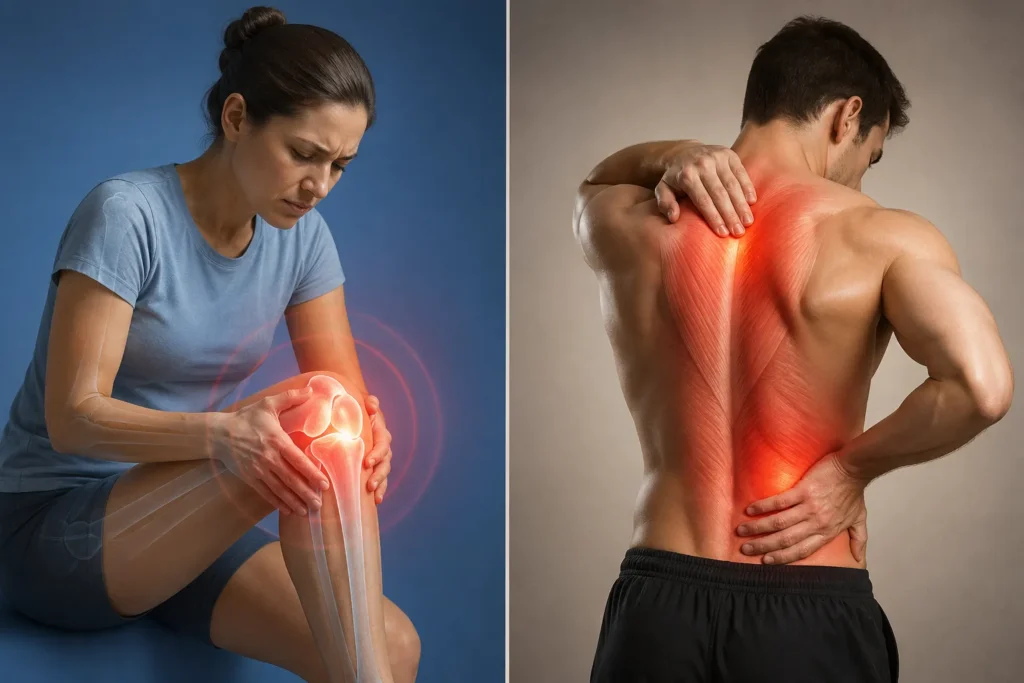
When Pain Feels Similar but Means Something Different
It’s common to feel aches and discomfort in your body and wonder what’s actually causing it. Is it coming from your muscles after a long day, or is it your joints signaling something deeper? Understanding the difference between joint pain vs muscle pain can help you respond appropriately, avoid worsening the issue, and seek the right care at the right time.
Many patients delay treatment because the symptoms feel similar. But knowing how to tell if pain is muscle or joint-related can make a meaningful difference in recovery and long-term health.
Key Takeaways
- Joint pain often feels deep, stiff, or linked to movement, while muscle pain is usually sore, tight, or tender
- Muscle pain may improve with rest, whereas joint pain may persist or worsen with inactivity
- Swelling, stiffness, or reduced range of motion often suggest joint involvement
- Identifying the difference between joint and muscle pain helps guide proper treatment decisions
What Is Muscle Pain?

Muscle pain (also called myalgia) typically results from overuse, strain, or minor injury. It can happen after exercise, poor posture, or repetitive movements.
Common characteristics:
- Aching, soreness, or tightness
- Pain localized to a specific area
- Tenderness when touched
- Often improves with rest, gentle stretching, or heat
Muscle pain is usually temporary and may resolve within a few days. However, persistent or severe muscle pain may need further evaluation through a structured approach to pain management care.
What Is Joint Pain?

Joint pain originates from the areas where bones meet, such as the knees, shoulders, hips, or elbows. It may be related to inflammation, injury, or underlying conditions like arthritis.
Common characteristics:
- Deep, throbbing, or sharp pain
- Stiffness, especially in the morning or after inactivity
- Swelling or warmth around the joint
- Reduced range of motion
Unlike muscle pain, joint pain may not improve with rest alone and can sometimes worsen without proper evaluation by experienced pain management specialists.
Joint Pain vs Muscle Pain: Key Differences
Understanding the difference between joint and muscle pain becomes easier when you compare how each type feels and behaves:
| Feature | Muscle Pain | Joint Pain |
| Location | Specific muscle area | Around joints |
| Sensation | Sore, tight, tender | Deep, stiff, aching |
| Movement Impact | May feel better with gentle movement | Often worsens or feels restricted |
| Swelling | Rare | Common |
| Response to Rest | Usually improves | May persist or worsen |
How to Tell If Pain Is Muscle or Joint
If you’re unsure whether you’re dealing with Joint Pain vs. Muscle Pain, consider these practical checks:
- Touch the area: Muscle pain is often tender to the touch; joint pain feels deeper
- Move the area: Muscle discomfort may ease with light movement, while joint pain may feel stiff or restricted
- Look for swelling: Visible swelling or inflammation often points to joint involvement
- Notice timing: Pain after activity may suggest muscle strain, while stiffness after rest may indicate joint issues
If these symptoms continue or become unclear, it may help to review the signs that explain when to seek specialized pain care.
Common Causes of Joint Pain vs Muscle Pain
Muscle Pain Causes:
- Overexertion or exercise strain
- Poor posture
- Muscle tension or stress
- Minor injuries
Joint Pain Causes:
- Arthritis (such as osteoarthritis or rheumatoid arthritis)
- Joint inflammation
- Injury or trauma
- Degenerative changes over time
Understanding whether your symptoms relate to short-term discomfort or a longer-lasting issue can be easier when comparing acute and chronic pain differences.
When Pain Might Need Medical Attention
While some discomfort resolves on its own, certain symptoms may indicate the need for professional care:
- Pain lasting more than a few weeks
- Severe or worsening discomfort
- Swelling, redness, or warmth around a joint
- Limited mobility or difficulty performing daily tasks
- Pain following an injury
A pain management specialist may evaluate your symptoms and recommend appropriate interventional treatment options, depending on the underlying cause.
Why the Difference Matters
Understanding Joint Pain vs. Muscle Pain is important because treatments differ. What helps muscle recovery may not be effective for joint-related issues.
For example:
- Muscle pain may improve with rest, hydration, and stretching
- Joint pain may require targeted therapies to address inflammation or structural issues
Getting the correct diagnosis early may help prevent the condition from worsening and support better long-term outcomes.
Making the Right Decision for Your Pain
If your pain is mild and improves within a few days, it may be safe to monitor at home. However, if symptoms persist, worsen, or interfere with daily life, it’s reasonable to seek medical guidance.
For patients in Lafayette and Opelousas, access to specialized pain management care can make it easier to get an accurate diagnosis and personalized treatment plan without delay.
You can also learn more about comprehensive care approaches at Interventional Pain Specialists or schedule a consultation with a care team to understand your symptoms and next steps better.
FAQs
1. How to tell if pain is muscle or joint-related?
Muscle pain is usually sore and tender, while joint pain feels deeper and may involve stiffness or swelling. Movement and touch can help differentiate the two.
2. Does joint pain feel different from muscle pain?
Yes. Joint pain often feels stiff or restricted and may worsen with inactivity, while muscle pain is more likely to feel sore and improve with gentle movement.
3. Can muscle pain turn into joint pain?
In some cases, untreated muscle issues may affect nearby joints over time, but they are different conditions and should be evaluated separately.
4. What is the main difference between joint pain and muscle pain?
The main difference lies in location and sensation—muscle pain is surface-level and tender, while joint pain is deeper and often associated with stiffness or swelling.
5. When should I see a doctor for Joint Pain vs. Muscle Pain?
You may consider seeing a doctor if pain lasts longer than a few weeks, worsens, or limits your daily activities.
Medical References
- Mayo Clinic
- Cleveland Clinic
- National Institutes of Health (NIH)
- American Academy of Orthopaedic Surgeons (AAOS)
- American Society of Interventional Pain Physicians (ASIPP)
Disclaimer
This content is for informational purposes only and does not replace professional medical advice. Always consult a qualified healthcare provider for diagnosis and treatment.