
SI Joint Pain Treatment
Advanced Diagnosis and Minimally Invasive Treatment for SI Joint Dysfunction
Pain in the lower back, buttock, hip, or groin does not always come from the spine. In some patients, the source may be the sacroiliac joint, commonly called the SI joint.
At Interventional Pain Specialists, Albert Gros, Jr., MD, who is board certified by the American Board of Anesthesiology and the American Board of Pain Medicine and has over two decades of experience in anesthesiology and interventional pain management, evaluates SI joint dysfunction. He provides treatment options ranging from conservative care and image-guided injections to minimally invasive SI joint fusion using the iFuse INTRA X® Allograft Implant System for appropriate patients.

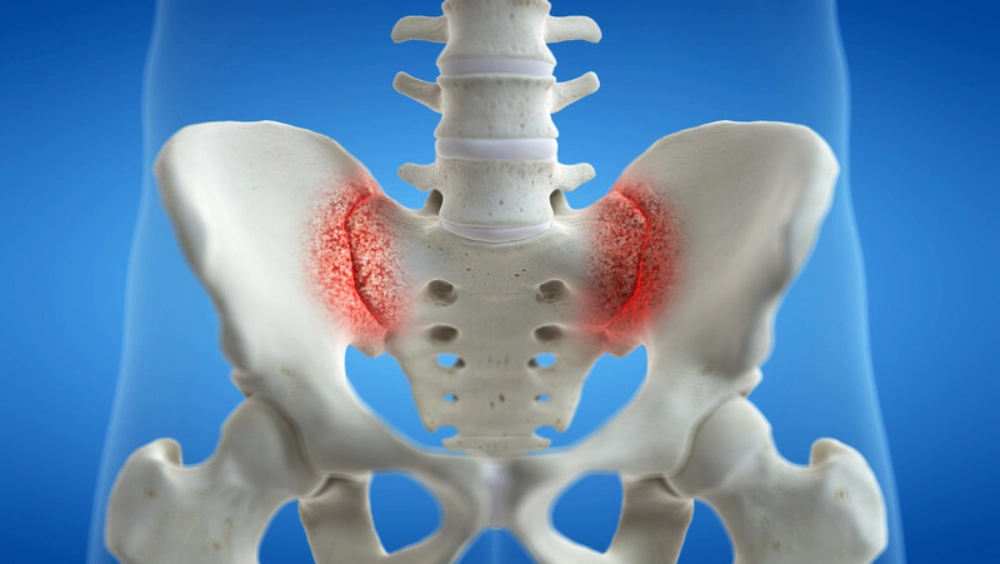
What Is SI Joint Dysfunction?
The sacroiliac joints connect the sacrum at the base of the spine to the iliac bones of the pelvis. These joints help transfer force between the upper body and the legs while providing stability to the pelvis.
When an SI joint becomes irritated, unstable, injured, or degenerative, it may cause pain in the lower back, buttock, pelvis, hip, or groin.
SI joint pain can sometimes be mistaken for other causes of lower back or hip pain, which is why identifying the actual source is important before beginning treatment.
Symptoms of SI Joint Dysfunction
Common symptoms may include:
- Lower back pain, often felt on one side
- Buttock or pelvic pain
- Hip or groin pain
- Pain when moving from sitting to standing
- Pain that worsens with standing or walking
- Difficulty sitting for long periods
- Pain when sitting more heavily on one side
- A feeling of leg instability or giving way
- Sleep disruption due to pain
Symptoms can overlap with conditions involving the lumbar spine, hips, or nerves, so proper evaluation is important.
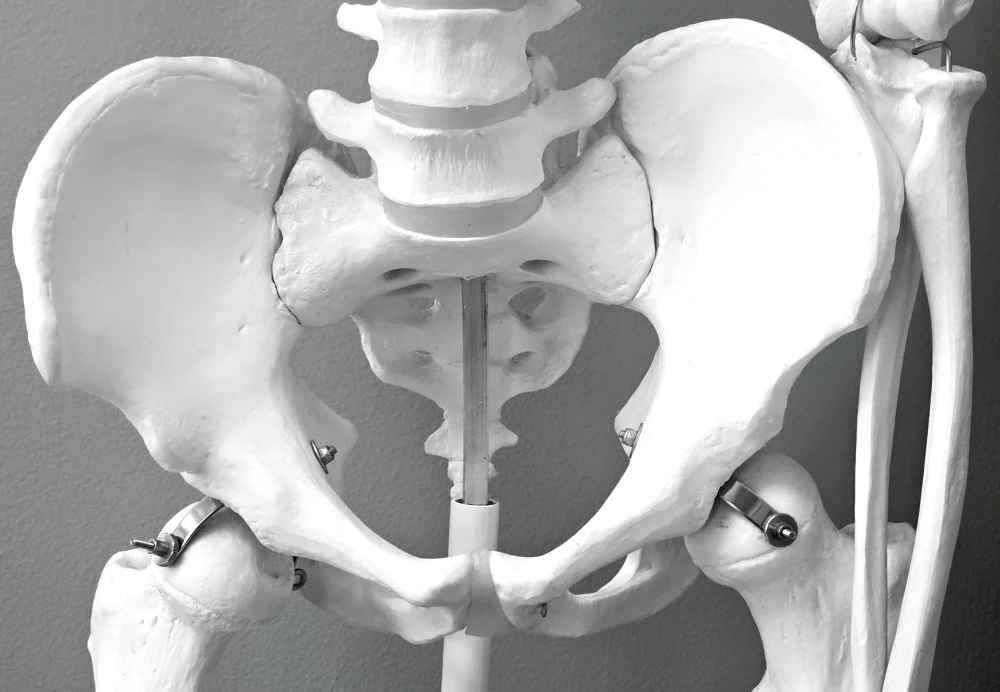

What Can Cause SI Joint Pain?
SI joint pain or dysfunction may be associated with:
- SI joint degeneration or arthritis
- Joint instability
- Ligament laxity
- Trauma
- Repetitive physical stress
- Pregnancy-related changes
- Previous lumbar spine surgery
- Changes in movement or biomechanics Differences in leg length or altered walking mechanics
- Inflammatory arthritis
The underlying cause can vary from patient to patient.
How Is SI Joint Pain Diagnosed?
Diagnosing SI joint pain often requires more than identifying where a patient feels discomfort.
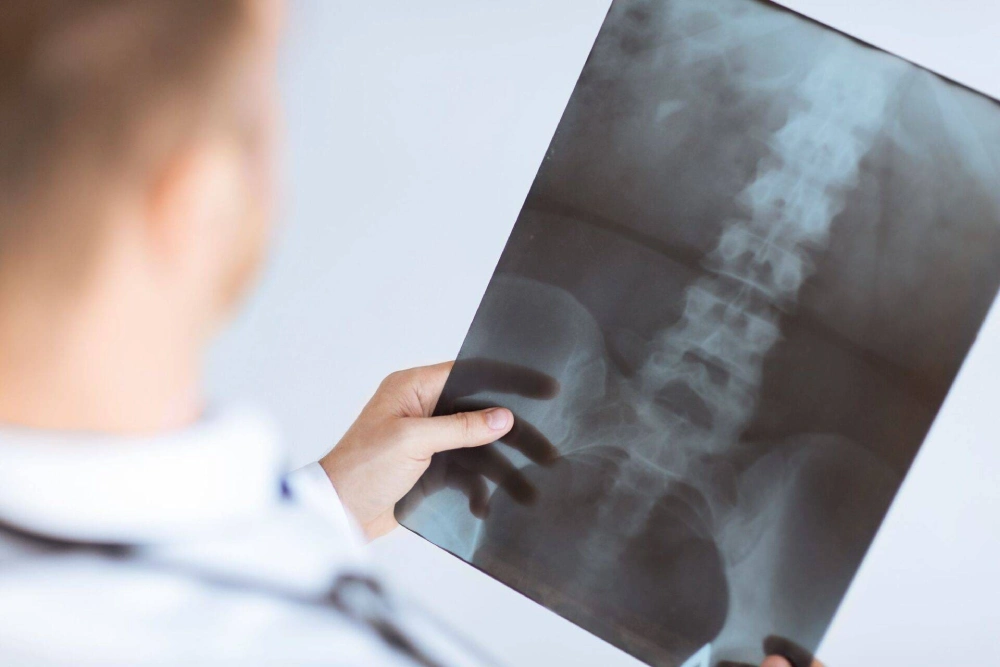
A medical history, physical examination (including provocation tests that stress the joint), and imaging such as X-rays, CT scans, or MRI may help evaluate the SI joint and rule out other causes involving the lumbar spine or hip. Imaging alone often cannot confirm that the SI joint is the source of pain.
Diagnostic SI joint injection: An image-guided injection may help determine whether the SI joint is contributing to a patient’s symptoms. If pain is significantly reduced afterward, it provides additional evidence that the SI joint may be an important pain source.
SI Joint Treatment Options
Treatment depends on the cause of the pain, the severity of symptoms, and the response to previous care.
Conservative Treatment
Initial treatment may include physical therapy, medications, activity modification, and other nonsurgical approaches.
SI Joint Injections
Image-guided SI joint injections may be used to reduce inflammation and can also help determine whether the SI joint is contributing to a patient's pain.
Minimally Invasive SI Joint Fusion
When SI joint pain continues despite appropriate conservative treatment, minimally invasive SI joint fusion may be considered for selected patients.
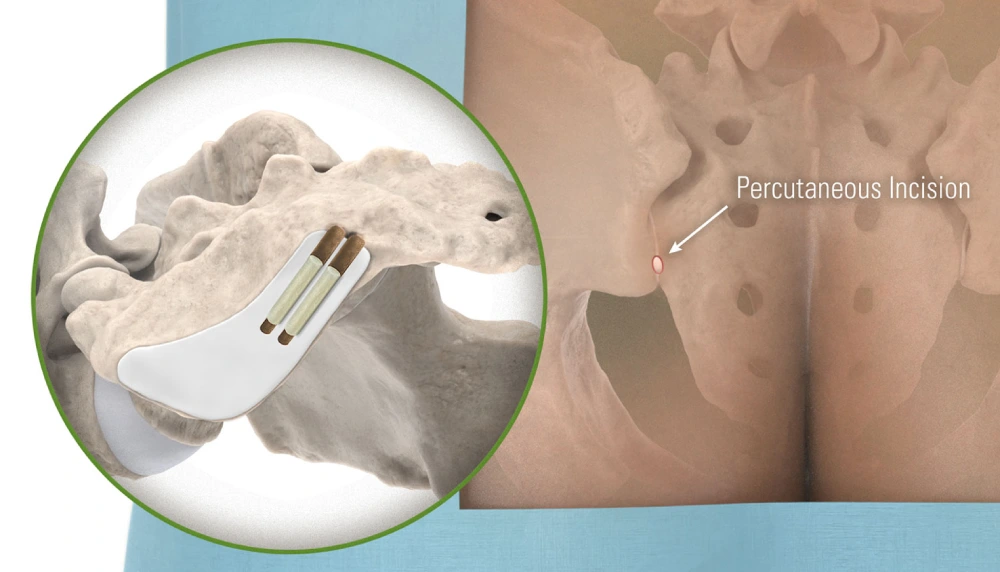
SI Joint Fusion With iFuse INTRA X®
The iFuse INTRA X® Allograft Implant System is designed to stabilize the SI joint and promote fusion.
The procedure is performed through a small incision in the lower back. Using specialized instrumentation, two small cylindrical implants made from bone allograft are placed into the SI joint. The implants are designed to:
- Stabilize the SI joint
- Reduce motion in the joint
- Promote fusion across the joint
The procedure is typically performed under monitored anesthesia care or sedation and, according to SI-BONE, usually takes less than an hour. Time varies by patient.
Who May Be Evaluated for SI Joint Fusion?
SI joint fusion may be considered for patients with persistent SI joint pain that has not responded adequately to conservative treatment. Conditions we may evaluate include:
- Chronic SI joint pain and sacroiliac joint dysfunction
- SI joint degeneration
- SI joint instability
- Pain related to ligament laxity or trauma
- Persistent or new lower back or buttock pain after lumbar spine surgery when the SI joint is identified as a pain source
- Pain that continues despite physical therapy, medications, injections, or other conservative treatments
Not every patient with SI joint pain requires fusion. A careful evaluation is necessary to determine whether the SI joint is causing the symptoms and which option is most appropriate. Candidacy is determined by your physician in line with the device’s instructions for use.

How Common Is SI Joint Pain?
Studies estimate that the SI joint contributes to approximately 15% to 30% of chronic, mechanical lower back pain. Because SI joint symptoms can resemble other spine, hip, or nerve conditions, identifying the correct source of pain is an important part of treatment planning.
Why Choose Interventional Pain Specialists?
Comprehensive SI joint evaluation:
Treatment begins with determining whether the SI joint is actually contributing to your symptoms.Diagnostic and interventional options:
Patients may have access to conservative treatment, image-guided SI joint injections, and other interventional options based on their diagnosis.Minimally invasive SI joint fusion:
For appropriately selected patients, Dr. Gros offers fusion using the iFuse INTRA X® Allograft Implant System.Local care:
We serve patients in Lafayette and Opelousas, Louisiana.

Could Your Lower Back Pain Be Coming From the SI Joint?
Persistent lower back, buttock, hip, or pelvic pain may sometimes originate from the sacroiliac joint rather than the lumbar spine. Dr. Gros and our team can evaluate your symptoms, help determine the source of your pain, and discuss appropriate treatment options.
Lafayette Office
Opelousas Office
Frequently Asked Questions
Where is SI joint pain usually felt?
SI joint pain is commonly felt in the lower back, buttock, pelvis, hip, or groin. Symptoms may sometimes extend into the leg.
Can SI joint pain feel like sciatica?
Yes. SI joint dysfunction and sciatica can produce symptoms in similar areas. An evaluation can help determine whether pain is coming from the SI joint, lumbar spine, hip, or a nerve.
How do doctors determine whether the SI joint is causing pain?
Evaluation may include a medical history, physical examination, imaging, and an image-guided diagnostic SI joint injection.
Do all patients with SI joint pain need fusion?
No. Initial treatment may include physical therapy, medications, activity modification, and SI joint injections. Fusion is generally considered only for selected patients whose symptoms continue despite appropriate conservative treatment.
What is iFuse INTRA X®?
iFuse INTRA X® is an allograft implant system designed to stabilize the SI joint and promote fusion.
How is iFuse INTRA X® placed?
Two cylindrical bone allograft implants are placed into the SI joint through a small incision in the lower back using specialized instrumentation.
How long does the procedure take?
SI-BONE states that the iFuse INTRA X procedure is generally completed in less than an hour, although procedure time can vary depending on the individual patient.