Chronic neck, back, or joint pain can limit your life, making simple tasks feel like uphill battles and sapping your quality of life. If you’ve tried medications, physical therapy, and injections without lasting success, radiofrequency ablation may be worth learning about. This outpatient procedure uses targeted heat to interrupt pain signals at their source, offering pain relief after radiofrequency ablation that can last months or longer.
Key Takeaways
- Radiofrequency ablation interrupts pain signaling by heating targeted nerves.
- Relief can begin within weeks and often lasts 6–18 months.
- It’s minimally invasive with a short recovery period.
- Comparisons with other treatments help you weigh your options.
- Not all pain types respond equally—diagnostic testing helps determine fit.
What Is Radiofrequency Ablation?
Radiofrequency ablation is a minimally invasive interventional pain procedure that uses controlled heat energy to interrupt the transmission of pain signals along targeted sensory nerves. In applications such as spinal or knee pain, this method can provide durable relief in people who have not responded to physical therapy, medication, or nerve blocks.
Unlike surgical procedures, the goal isn’t to correct structural issues but to reduce the nerve’s ability to send pain signals to the brain — often for six months to a year or more.
Radiofrequency Ablation Procedure
Preparation
- Review of clinical history and imaging to confirm pain source.
- Diagnostic nerve blocks may be used to predict potential relief.
How It Works
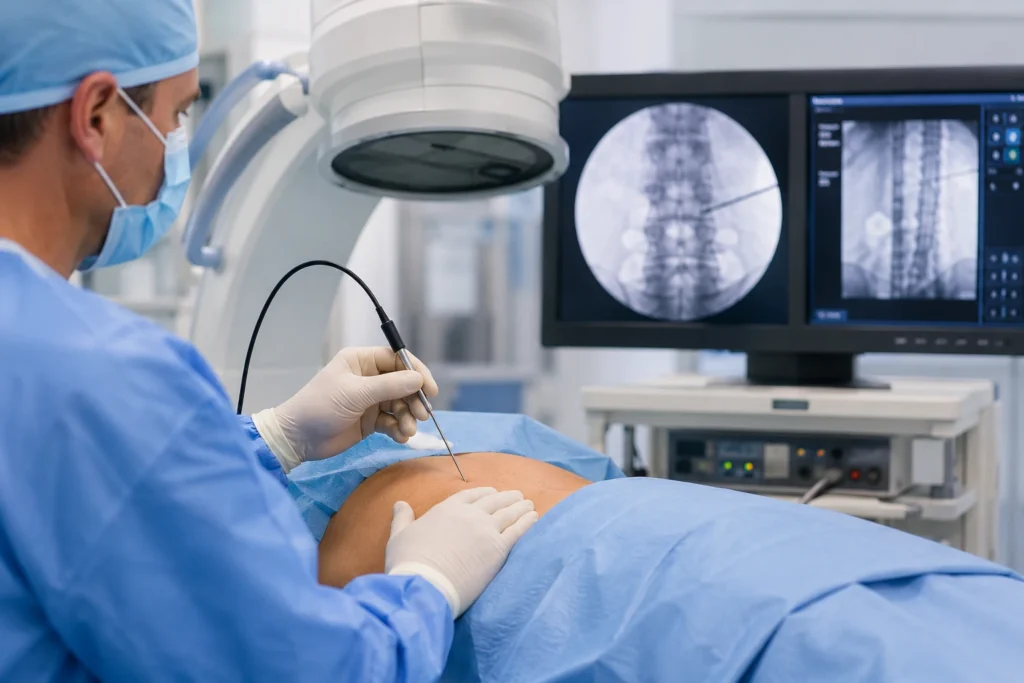
A pain specialist inserts a fine needle under imaging guidance to the vicinity of the nerve transmitting pain. A radiofrequency‑generating electrode delivers heat that disrupts the nerve’s ability to transmit pain signals. Learn more about our providers who perform this procedure.
What Happens During the Procedure
- Local anesthesia minimizes discomfort.
- Procedure time varies by area treated, typically under two hours.
- Multiple nerves can be addressed in a single session.
Pain Relief After Radiofrequency Ablation
Most patients experience a noticeable reduction in pain within days to a few weeks. Pain relief after radiofrequency ablation can last 6–18 months or longer, depending on your condition and how your nerves regenerate.
- Some patients feel relief immediately, while others notice gradual improvement.
- Over time, nerves may regenerate, and pain may return — but the procedure can often be repeated safely.
Radiofrequency Ablation Recovery – What to Know
Recovery after radiofrequency ablation is generally quick:
- Most people return home the same day.
- Rest and limited activity for the first 24 hours is recommended.
- Mild soreness or discomfort near the treatment site can occur for a few days. Ice and pain medication can help.
- You can usually resume normal activities within 48–72 hours.
Learn more about when to see interventional pain specialists for guidance on recovery and follow-up.
Radiofrequency Ablation Risks and Benefits
Benefits
- Longer‑lasting pain relief than some injections.
- Minimally invasive with low complication rates.
- Reduces dependency on pain medications.
- Usually, an outpatient, same‑day procedure.
Risks
- Temporary soreness or numbness at the site.
- Infection or bleeding (rare).
- Risk of nerve injury or incomplete relief.
- Pain possibly returning as nerves regenerate.
When performed by experienced specialists using imaging guidance, serious complications are uncommon. Learn more about pain management vs surgery options.
How Radiofrequency Ablation Compares with Other Pain Treatments
1. Intracept Procedure vs Radiofrequency Ablation
- The Intracept procedure targets pain from the vertebral endplates, often in chronic low back pain.
- Radiofrequency ablation targets nerves transmitting pain signals.
- Intracept may be preferred for specific disc‑related pain; RFA often suits joint‑related pain.
2. Radiofrequency Ablation vs Epidural Injection
- Epidural injections deliver steroids to reduce inflammation around spinal nerves.
- RFA directly interrupts pain transmission for longer‑lasting relief.
- Epidurals may act quickly but often provide a shorter change in symptoms.
3. Radiofrequency Ablation vs Steroid Injection
- Steroid injections may reduce inflammation; relief can be temporary.
- RFA targets the nerve itself, often resulting in extended pain relief.
- RFA typically requires prior diagnostic blocks to confirm ideal targets.
4. Radiofrequency Ablation vs Spinal Cord Stimulator
- Spinal cord stimulation uses electrical pulses to “mask” pain signals.
- RFA stops pain signal transmission by interrupting the nerves.
- Stimulators may be preferred for neuropathic or surgical back pain, whereas RFA is for joint‑mediated pain.
These comparisons can help guide treatment discussions with your pain specialist based on your diagnosis and goals.
Is Radiofrequency Ablation Right for You?
This option is most appropriate when:
- Pain is chronic and localized to specific spine joints or knees.
- Conservative treatments haven’t provided lasting relief.
- Diagnostic nerve blocks indicate likely benefit.
Discuss your symptoms, imaging, and treatment history with a pain specialist to determine if this method aligns with your goals. Visit our procedures page to see if radiofrequency ablation is offered for your condition.
Conclusion
Radiofrequency ablation is a targeted, evidence‑based pain relief procedure that interrupts pain signals from specific nerves. It bridges the gap between conservative care and more invasive surgery, offering many patients lasting relief and improved quality of life. When performed by experienced professionals at Interventional Pain Specialists, it’s a reliable tool in the interventional pain management toolkit. For consultations, contact us here.
FAQs
1. How much does radiofrequency ablation cost?
The cost of radiofrequency ablation varies based on location, facility, and insurance coverage. On average, it ranges from $1,500 to $4,000 per session. Many insurance plans cover the procedure if deemed medically necessary.
2. Is radiofrequency ablation painful?
Most patients experience minimal discomfort. Local anesthesia is used during the procedure, and some soreness afterward is common but usually resolves within a few days.
3. Does radiofrequency ablation hurt?
The procedure itself is generally well-tolerated. Patients may feel a brief pinch or pressure, but post-procedure soreness is mild and temporary, improving within a few days.
4. When can I start exercising after radiofrequency ablation?
Light activity is encouraged after 24–48 hours, but avoid strenuous exercise for a week. Gradually return to normal routines while following your provider’s instructions for optimal recovery.
5. How many times can you have radiofrequency ablation?
Radiofrequency ablation can be repeated as needed, typically every 6–18 months, depending on pain recurrence and individual response to treatment.
6. How to sleep after radiofrequency ablation?
Sleep in a comfortable position that avoids pressure on treated areas. Using supportive pillows and a firm mattress can help reduce soreness for the first few nights.
7. How long does it take for radiofrequency ablation to work?
Pain relief often begins within a few days to two weeks, as inflammation subsides and treated nerves are less active. Full effect may take up to several weeks.
8. How long do radiofrequency ablation side effects last?
Mild soreness, numbness, or tingling typically resolves within a few days to a week. Rare side effects may persist longer, but are uncommon when performed by specialists.