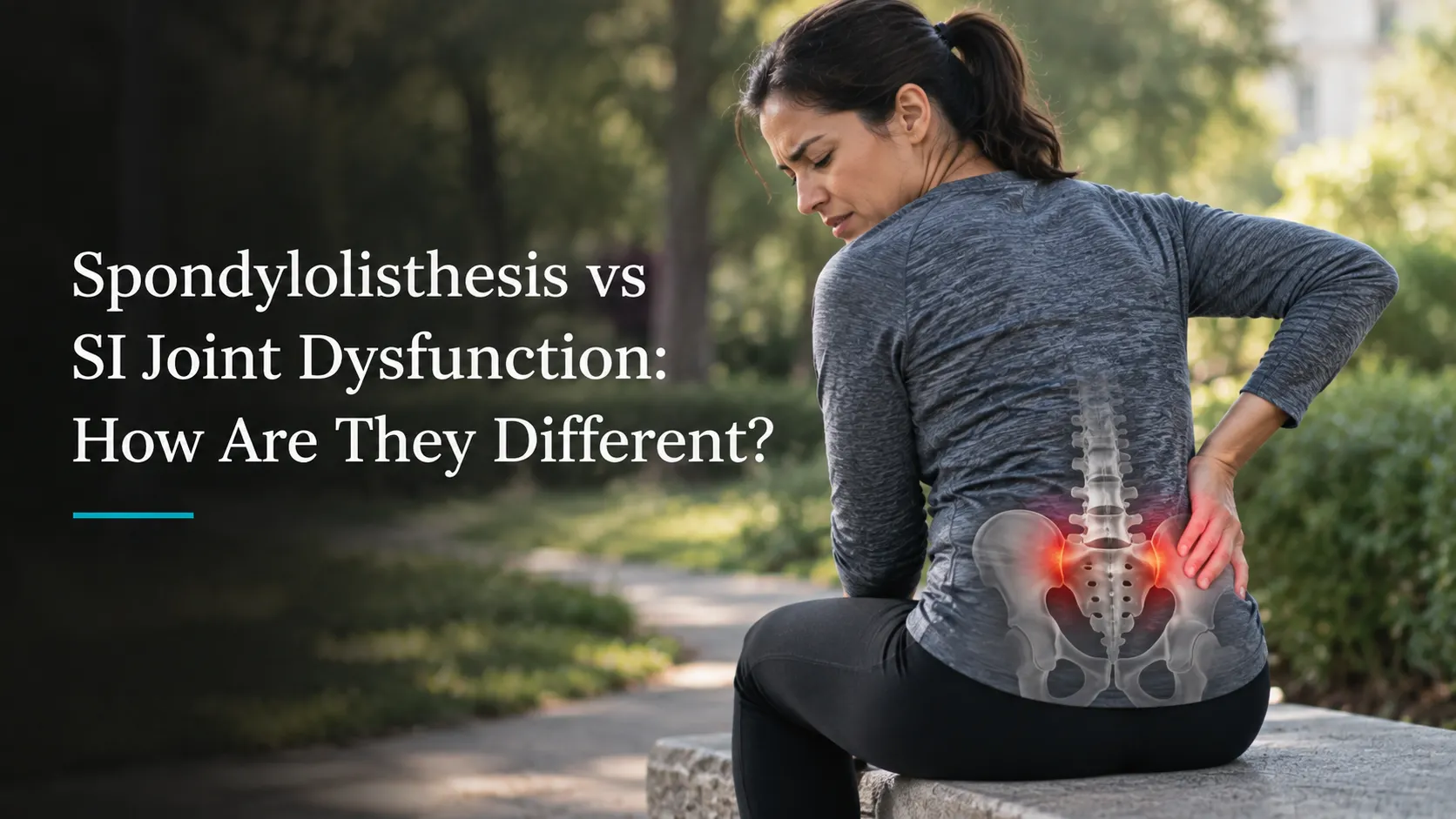

SI joint dysfunction is a common but often overlooked cause of lower back, hip, buttock, and pelvic pain.
Many patients assume their symptoms are caused by sciatica, a herniated disc, or general lower back strain when the sacroiliac (SI) joints may actually be contributing to the pain.
SI joint pain can range from mild stiffness to severe discomfort that affects walking, standing, climbing stairs, sitting for long periods, and everyday movement.
Some patients experience pain on one side of the lower back, while others notice radiating symptoms into the hips, groin, buttocks, or legs.
Because SI joint dysfunction often mimics other spinal conditions, it is frequently misdiagnosed.
The good news is that many patients can improve without major surgery through proper diagnosis, rehabilitation, minimally invasive procedures, and interventional pain management.
In this guide, we’ll explain:
- What the SI joints do
- Common symptoms of SI joint dysfunction
- What causes SI joint pain
- How SI joint dysfunction differs from sciatica
- Non-surgical treatment options
- When to seek medical evaluation
What Are the SI Joints?
The sacroiliac (SI) joints connect the sacrum at the base of the spine to the pelvic bones.
There is one SI joint on each side of the lower spine.
These joints help:
- Transfer weight between the upper body and legs
- Stabilize the pelvis
- Absorb shock during movement
- Support walking and standing
Although SI joints normally move only slightly, inflammation or instability may cause significant pain.
What Is SI Joint Dysfunction?
SI joint dysfunction occurs when the sacroiliac joints become inflamed, irritated, unstable, or move abnormally.
Pain may develop from:
- Excess joint movement (hypermobility)
- Reduced movement (hypomobility)
- Arthritis
- Injury
- Pregnancy-related joint changes
- Degeneration over time
SI joint dysfunction may affect one or both sides of the body.
According to the American Academy of Orthopaedic Surgeons (AAOS), SI joint dysfunction is a recognized cause of lower back pain in some patients.
Common Symptoms of SI Joint Dysfunction
Symptoms often vary depending on the degree of inflammation and surrounding nerve irritation.
Common symptoms include:
- Lower back pain
- Pain on one side of the lower back
- Buttock pain
- Hip pain
- Groin pain
- Pelvic discomfort
- Pain while standing
- Pain climbing stairs
- Pain after sitting for long periods
- Stiffness in the lower back or pelvis
- Pain while walking
- Pain radiating into the leg
Some patients notice worsening pain while transitioning from sitting to standing.
Others experience symptoms after prolonged activity.
What Causes SI Joint Dysfunction?
Several conditions may contribute to SI joint irritation or instability.
1. Arthritis and Joint Degeneration

Arthritis affecting the SI joints may gradually damage cartilage and increase inflammation.
This is more common with aging and chronic wear and tear.
2. Pregnancy and Hormonal Changes
Pregnancy hormones can loosen the ligaments supporting the SI joints.
This may increase pelvic instability and contribute to pain.
Some patients continue experiencing SI joint pain after pregnancy.
3. Injury or Trauma
Falls, sports injuries, and car accidents may strain or damage the SI joints.
Some patients develop symptoms immediately, while others notice pain gradually worsening over time.
4. Abnormal Walking Patterns
Changes in gait, leg length differences, or altered biomechanics may place uneven stress on the SI joints.
5. Spinal Conditions
Conditions such as:
- Herniated discs
- Spinal fusion surgery
- Degenerative disc disease
- Scoliosis
may change spinal mechanics and increase stress on the SI joints.
SI Joint Pain vs Sciatica
SI joint dysfunction is commonly confused with sciatica because both conditions may cause lower back and leg pain.
However, they are not identical.
SI Joint Dysfunction
Commonly causes:
- Buttock pain
- Pain near the pelvis
- Pain while standing or climbing stairs
- Pain on one side of the lower back
- Pain transitioning from sitting to standing
Sciatica
Commonly causes:
- Burning leg pain
- Tingling
- Numbness
- Radiating nerve pain
- Pain following the sciatic nerve pathway
Some patients may experience both conditions at the same time.
When Does SI Joint Dysfunction Become Serious?
Mild symptoms may improve with conservative treatment.
However, persistent or worsening pain should not be ignored.
Seek medical evaluation if you experience:
- Pain lasting several weeks or longer
- Difficulty walking
- Severe lower back or pelvic pain
- Pain interfering with sleep or daily activities
- Reduced mobility
- Symptoms worsening over time
- Pain after an injury or accident
Persistent inflammation may contribute to chronic pain and movement problems.
How SI Joint Dysfunction Is Diagnosed
Because SI joint symptoms overlap with other spinal conditions, diagnosis can sometimes be challenging.
An interventional pain specialist typically begins with:
- Medical history review
- Physical examination
- Mobility testing
- Joint stress tests
Imaging studies may include:
- X-rays
- MRI scans
- CT scans
In some cases, diagnostic SI joint injections may help confirm the source of pain.
The goal is to identify whether the SI joints are contributing to symptoms.
If you are unsure when specialized evaluation is appropriate, read about when to see an interventional pain specialist.
Non-Surgical Treatment Options for SI Joint Dysfunction
Many patients improve without surgery.
Treatment depends on:
- Severity of inflammation
- Joint instability
- Associated spinal conditions
- Mobility limitations
Conservative Treatment Options
These may include:
- Physical therapy
- Stretching programs
- Core strengthening
- Pelvic stabilization exercises
- Activity modification
- Ergonomic adjustments
- Anti-inflammatory medications
- Heat and ice therapy
Rehabilitation often focuses on improving joint stability and movement mechanics.
Interventional Pain Management Treatments
When conservative care does not provide enough relief, minimally invasive procedures may help reduce inflammation and interrupt pain signals.
SI Joint Injections
SI joint injections deliver anti-inflammatory medication directly into the affected joint.
These injections may help:
- Reduce inflammation
- Confirm the pain source
- Improve mobility
- Reduce pain flare-ups
Radiofrequency Ablation (RFA)
RFA uses heat generated by radio waves to interrupt pain-transmitting nerves.
This procedure may help some patients with chronic SI joint pain.
Some patients experience pain relief lasting several months or longer.
More details here: radiofrequency ablation for pain relief.
Physical Rehabilitation Support
Rehabilitation may help improve:
- Pelvic stability
- Muscle support
- Joint alignment
- Movement patterns
Can SI Joint Dysfunction Go Away on Its Own?
Some mild cases improve with rest, rehabilitation, and reduced inflammation.
However, recurring or worsening symptoms may indicate chronic instability or joint degeneration.
Persistent pain should still be professionally evaluated, especially if symptoms continue despite daily chronic pain management efforts.
What Makes SI Joint Pain Worse?
Several activities may increase stress on the SI joints.
Common triggers include:
- Prolonged standing
- Climbing stairs
- Sitting for long periods
- Uneven walking patterns
- Twisting movements
- Pregnancy-related instability
- Repetitive impact activities
Some patients also notice worsening symptoms after prolonged inactivity.
When Should You See a Pain Specialist?
You should consider seeing an interventional pain specialist if:
- Pain lasts several weeks or longer
- Lower back pain keeps returning
- Conservative treatment is not helping
- Daily activities are becoming difficult
- Pain interferes with mobility
- You want to avoid surgery if possible
Early evaluation may help prevent worsening inflammation and chronic movement dysfunction.
You can also learn what to expect at your first pain management appointment.
SI Joint Dysfunction Treatment in Lafayette, LA
At Interventional Pain Specialists, we help patients throughout Lafayette and surrounding Louisiana communities find advanced, non-surgical treatment options for SI joint dysfunction and chronic lower back pain.
Our team focuses on identifying the source of joint irritation and developing personalized treatment plans tailored to each patient’s symptoms, mobility limitations, and lifestyle.
Treatment plans may include:
- Minimally invasive procedures
- Image-guided injections
- Joint-targeted therapies
- Rehabilitation coordination
- Long-term pain management strategies
Whether your symptoms developed gradually or after an injury, early evaluation may help clarify your treatment options.
Conclusion
SI joint dysfunction is a common but frequently overlooked cause of lower back, pelvic, and hip pain.
Because symptoms often mimic sciatica and other spinal conditions, proper diagnosis is essential before selecting treatment.
For many patients, non-surgical therapies may help reduce inflammation, improve stability, restore mobility, and reduce chronic pain without major surgery.
Early evaluation often provides the best opportunity to prevent worsening joint dysfunction and long-term mobility problems.
Frequently Asked Questions
What does SI joint pain feel like?
SI joint pain commonly causes lower back, buttock, hip, or pelvic pain, especially while standing, walking, or climbing stairs.
Can SI joint dysfunction cause leg pain?
Yes. Some patients experience radiating pain into the legs or buttocks.
How is SI joint dysfunction treated?
Treatment may include physical therapy, rehabilitation, injections, radiofrequency ablation, and minimally invasive pain management procedures.
Is SI joint dysfunction the same as sciatica?
No. SI joint dysfunction affects the sacroiliac joints, while sciatica involves irritation of the sciatic nerve.
When should I worry about SI joint pain?
You should seek medical evaluation if symptoms worsen, mobility decreases, or pain interferes with daily activities.
Medical References
- Mayo Clinic – Sacroiliitis
https://www.mayoclinic.org/diseases-conditions/sacroiliitis/symptoms-causes/syc-20350747 - Spine-health – SI Joint Dysfunction
https://www.spine-health.com/conditions/sacroiliac-joint-dysfunction